







English version of the interview here.
A Rewarding Two-Person Exhibition
Hanada: Thank you so much for the joint exhibition with Mr. Hanaoka last November.
Takashi Yomiya : Seeing my own work right next to Mr. Hanaoka’s allowed me to look at what I do objectively, and it made me want to elevate the quality of my craftsmanship even further. Simply put, it means making things more soundly so that they are completely stress-free for the user. That includes not just how they look, but also their user-friendliness, like durability and weight.
Hanada: So you definitely felt a sense of achievement.
Takashi Yomiya : Yes. It gave me the confidence that staying true to my own sensibilities is the right path.
Hanada: It was truly impressive to see two artists, both so sincere and honest with their own sensibilities, engage in such a genuine creative showdown. The chemistry between your works was excellent too. Did you always aim for the style you have now?
Takashi Yomiya : When I first started pottery, I was actually interested in tea utensils. I originally entered this world because of my love for antique Karatsu ware, and when I first went independent, that was the kind of work I aspired to make. But I couldn’t do it at all. More than a technical issue, those kinds of pieces just didn’t come from within me. One day, I realized that it simply wasn’t inside me, but it was painful until I reached that realization. I was struggling desperately. However, once I accepted it and decided to make things I could be honest with—to just fire what I could fire—things became much easier. Now, I hope my work becomes a classic a hundred years from now.
Lessons from Apprenticeship
Hanada: Your experience at Ryuta-gama, where you did your apprenticeship, must have been significant as well.
Takashi Yomiya : Seeing the master and the people there use everyday tableware made me realize that such a world existed. Until then, I only knew about classical pieces or works by Living National Treasures, so Mr. Nakazato’s world was a revelation to me.
Hanada: What you gained from Mr. Nakazato was the firsthand experience of his everyday life as a ceramic artist.
Takashi Yomiya : While I knew about classics and Living National Treasures on one hand, it was also during the bubble economy era, so magazines were filled with glitzy food and tableware (laughs). Knowing only those two extremes, I think I had become too theoretical. I was genuinely amazed during my apprenticeship by how beautiful and stylish a simple dish of simmered vegetables could look.
Hanada: The dining table at Ryuta-gama taught you something truly important.
Takashi Yomiya : Even though it was more than twenty years ago, I still clearly remember the scene of my first dinner there. Right at the start, I was scolded severely for my table manners. I was already nervous, and being yelled at made my hands shake so much that I couldn’t even pour the soy sauce properly (laughs). I had no idea what I was eating. That meal definitely ranks in the top three most memorable dining experiences of my life.
Hanada: (Laughs) The fact that you can laugh about it now means it is a fond memory for you.
Takashi Yomiya : Absolutely. Including experiences like that, I believe I learned the absolute fundamentals of pottery making at Ryuta-gama.
An Awareness of “Texture”
Hanada: Is there anything you keep foremost in mind when making your pieces?
Takashi Yomiya : Just that they make food taste delicious, I suppose. And that they are as light and durable as possible. I’m sorry, but to be honest, I don’t think about it too deeply; they just turn out this way when I make them (laughs).
Hanada: You often use the word “texture,” don’t you?
Takashi Yomiya : I don’t mean texture just in the superficial sense of the pottery’s surface, but rather a sensation that has become ingrained within me. There is an acceptable range for my personal sense of texture. There are boundaries too—like making something precisely, but without letting it become too rigid. Or, while it must be easy to use as tableware, I also want to preserve the natural quality of the clay. I try to hold back various elements just before they compromise others. My own sense of texture serves as the benchmark for that.
Hanada: Does that sense of texture change from time to time?
Takashi Yomiya : I think the texture you like remains unchanged. It is something you are born with. For example, even in my work, when I think I’ve come up with a brand-new idea, I often find I made the exact same thing a few years ago. And I usually made the same kind of mistake back then too (laughs). But it is slightly better than it was a few years ago. I build upon those small improvements bit by bit to develop my work. For me, my sense of texture is the foundation for moving forward. While I believe texture inherently stays the same, I’ve recently been careful not to dismiss things too easily so that I don’t narrow my horizons. I try to consciously accept everything.
Hanada: For instance?
Takashi Yomiya : My taste in women, perhaps (laughs). And alcohol, wine…
My Own Style
Hanada: Haha, it sounds like you are enjoying life. Now, returning to our topic, among the pieces created that way, there must be many that hold special memories for you.
Takashi Yomiya : Countless ones. Moreover, if you look at my workshop, you can tell that I do things that almost nobody else does. Other potters often don’t believe me when I tell them. They say, “I tried that, but it’s impossible” (laughs). In short, when you work in your own unique way, you create something distinctive. If you do the same thing as everyone else, you will only get the same results. The only things I still do exactly as I was taught are using the pottery wheel and the firing method. The slip decoration and glazing techniques are all entirely self-taught. My current work is a collection of things that I found interesting after various trials.
Hanada: Where do your ideas come from?
Takashi Yomiya : From failures. Most attempts end in failure, but I discover something from them. Also, our brains can be quite unreliable; things we saw somewhere or heard from someone before can surface as our own ideas. That can be dangerous. Lately, I verify every idea that comes to mind.
Hanada: Your work includes many highly original items like soup cups and your distinctive shinogi (incised patterns), which have now become established as a signature style for tableware.
Takashi Yomiya : Having people make similar things means it’s in vogue, so that’s not a bad thing. Besides, from my perspective, it would be harder and lonelier if no one tried to copy me (laughs). If everyone copies it and it becomes a trend, it ultimately comes back to benefit me.
Hanada: How do you see your life in pottery unfolding from here?
Takashi Yomiya : Right after going independent, I planned to make a living by traveling around craft fairs and pottery markets nationwide. But when I went to report my independence to my master, he told me, “If you can’t hold a solo exhibition in Tokyo, there was no point in you being here.” I just went along with him and said, “Yes, of course,” and hurriedly changed my direction.
Hanada: (Laughs) You certainly followed through on your words.
Takashi Yomiya : Truthfully, it was tough. I used to think that if my work sold well, life would get easier. As it turned out, the more it sells, the busier and harder it gets. It’s not that I just want to take it easy, but I still hold onto the dream of traveling around and selling my work from a camper van once my children are independent… someday. Looking back now, I don’t think I was a very good apprentice.
Hanada: These days, doesn’t Mr. Nakazato say that you are the one working the hardest?
Takashi Yomiya : That makes me happy. But back then, he even told me to quit pottery and become a chef.
Hanada: He must have meant that in a complimentary way.
Takashi Yomiya : I hope so. Come to think of it, he rarely praised my pottery, but his evaluation of my cooking was high. He even went so far as to offer to introduce me to a restaurant for employment. I wondered if he was actually serious (laughs).
Hanada: That is precisely why you can create such wonderful tableware.
Takashi Yomiya : There is a real sense of excitement when food is arranged on a piece of pottery. Besides, I just get thrilled when I am cooking.
Hanada: That is a natural talent.
Takashi Yomiya : Actually, cooking and pottery require a similar way of thinking. The concept of making something delicious out of whatever is in the refrigerator—I love the idea of building something up from scratch.
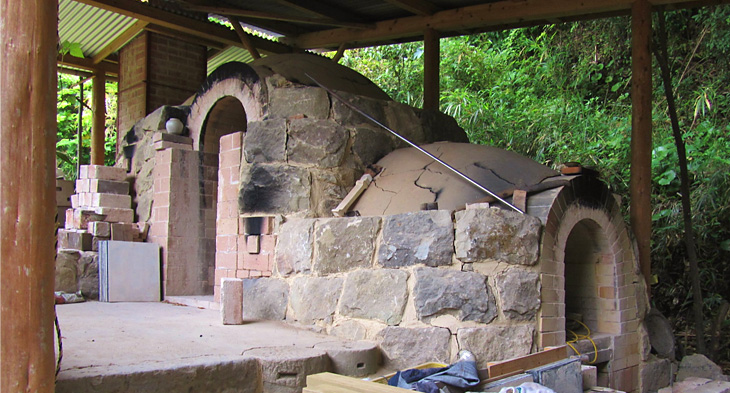
Hanada: You enjoy the process of construction.
Takashi Yomiya : Even if you don’t have convenient tools, it’s fun to improvise within those limits. For instance, the feeling that a dish will reach the perfect tenderness if simmered just a little longer is very close to the feeling in pottery that if I hold out just a bit more during firing, the glaze will melt beautifully. The crucial aspects are similar too. In both cooking and pottery, the cooling down period is vital. Preparation is equally essential for both. Kiln firing begins the moment you start preparing the clay.
Hanada: What does Amakusa mean to you?
Takashi Yomiya : Amakusa is where I was born and raised. In a good way, people here don’t pry into others’ business and just leave you alone. That allows me to work freely. It doesn’t become awkward even if I decline social invitations (laughs). The summers are cool, the winters aren’t too cold, the food is delicious, and it’s reasonably close to urban areas. I want for nothing. I sometimes think about moving elsewhere, but I always end up staying in Amakusa.
Hanada: Have you loved cooking since you were a child?
Takashi Yomiya : I was an overweight child in elementary school. When I came home from school, I would cook and eat ingredients from the restaurant (Mr. Yomiya’s family ran a restaurant). I used to plan menus during class.
Hanada: You are truly dyed-in-the-wool.
Takashi Yomiya : Consequently, I was always last in the marathon races.
Hanada: (Loud laughter) Well, we look forward to your solo exhibition.
Takashi Yomiya : Since it’s summer, I am also making vibrant pieces and porcelain. White items. It’s a summer version of the exhibition. I’ll be careful to ensure my work doesn’t make the summer feel oppressive.
Hanada: Thank you very much. I ended up asking all the questions, but do you have any final words?
Takashi Yomiya : I suppose I should say something clever and sophisticated… but for the past few years, I haven’t been thinking about anything like that. I don’t really want to explain my work. I try not to worry about the pains of creation or how others evaluate me. In the past, I used to say a lot of rationalized, logical things after the fact. There are times when you feel that logic helps you express yourself, right? But I’ve graduated from logic. Lately, I feel it’s better not to talk too much.
Hanada: Thank you very much.
≪ END ≫
手ごたえを感じた二人展
花田: 昨年11月には花岡さんとの二人展、有難うございました。(以下 花田-)
余宮: 花岡さんのものの横で自分の仕事を客観的にみることが出来ましたし、
仕事の質をより上げていきたいなと思いました。シンプルに、もっとしっかりと作るという
ことです。使う人にとってストレスないように。見た目はもちろん、強度や重さといった
使いやすさも含みます。
-: もちろん手ごたえも感じられた。
余宮: はい、自分の感性に正直にやっていることについては、間違っていないなと確信を
持つことが出来ました。
-: 自らの感性に誠実で正直なお二人の真剣勝負は、見ごたえがありました。
お二人の仕事の相性も良かったし。もともと今のようなスタイルを目指されていたのですか。
余宮: 焼き物を始めた頃は茶陶に興味があったんです。
元々古唐津が好きでこの世界に入ってきて、独立当初もそういうものを志していましたが、
ぜんぜん出来ない・・・技術的な問題以上に、なんか自分から出てこないんですよ、
ああいうものが。ある日、そういうものが自分の中にないんだなって気付くのですが、
その気付くまでがつらかった。やたらともがいていましたから。
でも、自分に正直になれるものを作ろう、焼けるものを焼こうって割り切ってから
随分楽になりました。自分の仕事が百年後にクラシックになればいいなって思っています。
修行時代に得たもの
-: 修行先である隆太窯での経験も大きかったのではないでしょうか。
余宮: 隆太窯で先生はじめそこの人々が日常のうつわを使っているのを見て、
こういう世界もあるんだなと思いました。それまではクラシックなものや、
人間国宝のものしか知らなかったんですけど、中里さんの世界は衝撃でした。
中里さんから余宮さんが得たもの。それは中里隆という陶芸家の日常を経験、 ということですね。 -:
余宮: クラシックや人間国宝の一方、当時まだバブルだったこともあって、
雑誌なんかは、料理や食器もキンキラキン(笑)。そういう両極端しか知らなくて、
多分頭でっかちになっていたんですね。
修行先で、野菜の煮物が、こんなに格好良いものなのかってビックリしましたもの。
-: 隆太窯の食卓は大切なことを余宮さんに与えてくれたのですね。
余宮: 20年以上も前の話なのに、初めての晩御飯の風景は今でもはっきり覚えていています。
最初にいきなり思いっきり叱られたんです、食事中のマナーについてね。
元々緊張している上に、怒鳴りつけられたら、もう手が震えて、醤油もうまくつげない・・・(笑)
何がなんだか分からない食事でした。
あれは僕の人生、思い出に残る食事の時間トップ3に間違いなく、食い込んできますね。
-: (笑)いま、笑って話せるって言うことは、余宮さんにとって良い思い出なんですね。
余宮: とにかく、そういうことも含めて隆太窯ではうつわ作りの基礎の基礎を学ばせて
もらえたと思います。
意識する「質感」
-: 余宮さんが、うつわを作るとき大切に考えていることありますか?
余宮: 料理が美味しく食べられる、ってことくらいでしょうか。
で、できるだけ軽くて割れづらくて・・・すみません、正直、あまり色々考えているわけでも
なくて、作るとこうなっちゃうんですよ(笑)。
-: 余宮さん、よく「質感」という言葉を使われますよね。
余宮: 焼き物の表面的な意味での「質感」ではなくて、自分に染み込んでいる感覚みたいな
ものです。その自分の質感には許される範囲があるんです。境界線もあって、
きっちり作るけど、固くなりすぎず、みたいな。或いは、食器として使いやすくなければ
いけない一方で、つち味も保ちたい。色々な要素を、他を損なわないギリギリ手前でとめる。
それは、その自分の「質感」が基準になっているんです。
-: 質感というのはその時どきで変わるものですか。
余宮: 自分の好きな質感って、変わらないものだと思います。持って生まれたもの。
例えば、仕事でも「新しいアイデア出た!」と思って作ると、数年前も同じものを作っていた
っていうことが多いんですよ。で、数年前も同じような失敗していたりする(笑)。
でも数年前より少し良くなっていてね。で、その上手くなっていた部分を少しずつ重ねて
いって仕事にしていくんです。
僕にとって、自分の質感というのは仕事を進める上で基礎になるものです。
質感は本質的には変わらないと思うんですが、ただ最近はその幅を狭めないためにも
物事を簡単に嫌いにならないように気をつけています。
なんでも意識して受け入れようとしています。
-: 例えば?
余宮: 女性の好みですかね(笑)。そして酒、ワイン・・・
自分のスタイル
-: ははは、楽しそうで良いですね。
さて、話し戻りますが、そうやって出来あがったものの中には、思い出深いものも多いのでは
ないでしょうか。
余宮: いくらでもあります。しかも、うちの仕事場見ると分かると思うんですけど、
誰もやっていないようなことばかりやっています。同業者に話しても信じてもらえない
ことも多い。「やってみたけどできないよ」って(笑)。
つまりね、自分だけの仕事のやり方すると、
個性あるものができあがる。他人と同じことしていたら、同じ結果しか出ませんから。
習ったままのかたちを今も続けているのは轆轤と焼き方くらいです。
化粧や釉薬のかけ方なんかもすべて自己流。今の僕の仕事は、色々試してみて、
面白いなと思うものの寄せ集めです。
-: アイデアはどこから?
余宮: 失敗からです。試みのほとんどは失敗するんですが、そこから何かを見付けだす。
あとね、結構脳みそってあてにならなくて、以前にどこかで見たものや誰かに聞いたことが、
自分のアイデアとして出てくるんですよ。それ危険です。
最近は出てきたものをいちいち確認する。
-: 余宮さんの仕事にはスープカップや独特なしのぎなどオリジナリティあふれるものも
多いですが、現在はうつわの一つのスタイルとして確立してしまった。
余宮: 似ている人がいるってことは流行っているってことですから、悪いことじゃない。
それにね、僕にしてみれば誰も真似してくれないほうがつらいし、寂しいですよ(笑)。
みんなが真似してくれて流行ってくれれば、自分に返ってくる。

-: これからどうなっていくんでしょう、余宮さんの陶芸人生。
余宮: 独立した直後はクラフトフェアや全国の陶器市をまわって食っていこうと思っていたん
です。で、師匠に独立の報告に行ったら「東京で個展できるようにならなきゃ、うちにいた
意味ないよ」って言われて、「はい、もちろんです」とか話し合わせて慌てて方向転換。
-: (笑) 有言実行ですね。
余宮: 実は、大変でしたよ。作るものが売れれば楽が出来ると思っていました。
そうしたら、売れれば売れるほどどんどん大変になってくる。楽したいわけじゃないけど、
結局いまだに子どもが独立したら、キャンピングカーで売り歩く夢は持っています・・・いつかね。
今思えば、僕はあまり出来の良い弟子ではなかったと思います。
-: 今では、中里さん「余宮が一番頑張っている」って言っているくらいじゃないですか。
余宮: うれしいです。でも当時は、焼き物やめて料理人になれってまで言われましたよ。
-: それは、良い意味なんじゃないですか。
余宮: だといいですけど。思い出すと、焼き物を褒められたことはほとんどありませんでした
が、料理の評価は高かった。就職先の料理屋を紹介する、まで言われるんですよ。え?
これ本気なのって・・・(笑)
-: だからこそよいうつわができるんですね。
余宮: 料理がうつわに盛られたときの高揚感ってあるんですよね。
それに、料理作ってると、興奮するんですよ。
-: それは天性のものですね。
余宮: 実際、料理と焼き物は頭の使いどころが似ているんです。
冷蔵庫の中にあるもので美味しいものをつくるという発想。
ないところから作り上げていくっていう発想が大好きなんですよね。
-: 構築の過程が楽しい。
余宮: 便利なものはなくても、その中で工夫していくのが楽しい。例えば、もうちょっと
煮込めばいいかたさになるなっていうのは、焼き物を焼いていてももうちょっと粘ると、
もう少し釉薬が良い感じで融けるな、なんていう感覚に近い。
それに大事なところも似ています。料理も焼き物も温度が下がっていくときが大切です。
それに下ごしらえも両方大切。粘土作るときから窯焚きは始まっています。
-: 余宮さんにとって天草とは?
余宮: 天草は生まれ育ったところだし、良い意味で他人に興味がない土地で、ほったらかし
といてくれるんですよ。だから自由に仕事が出来る。付き合いを断っても気まずくならない(笑)。
夏は涼しいし、冬もそんなに寒くない。食べ物も美味しいし。そこそこ都会。不自由ありません。
他の場所に移ることも考えるんだけど、結局天草にいてしまう。
-: 小さい頃から料理好きだったのですか?
余宮: 小学校のときは肥満児でした。学校から帰ってくると、料理屋(余宮さんのご実家は
料理屋さんです)の食材を料理して、食べていました。授業中、献立考えるんですよ。
-: 筋金入りですな。
余宮: したがって、マラソン大会ではいつもビリ。
-: (大笑)。さて、個展宜しくお願いします。
余宮 夏なので、艶やかなものや磁器も作っています。白いもの。夏バージョンの個展です。
僕のうつわで夏が暑苦しくならないように気をつけます。
-: 有難うございました。僕が一方的に質問してしまいましたが、言い残したことありますか?
余宮: 気の利いた格好いいこと言えばいいんでしょうけど・・・
ここ数年、なんにも考えていないんです。あまり自分の仕事を説明したくないんです。
生みの苦しみとか、他人からの評価とか、気にしないようにしています。昔はあとづけで
理屈っぽいことばかり言っていました。自分を表現するのに、理屈が助けてくれるような
気がするときってあるでしょう。でも、理屈はもう卒業。しゃべり過ぎるのは良くないなって、
最近はそう思っています。
-: 有難うございました。
関連記事はこちら