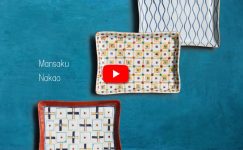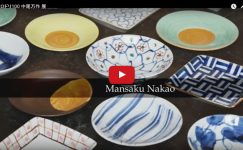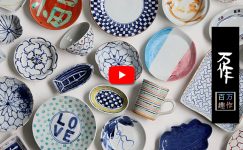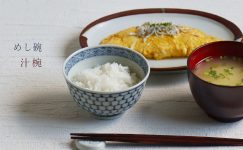



English version of the interview here.
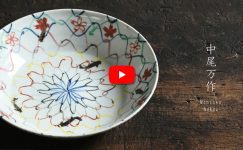
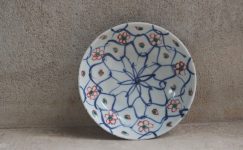
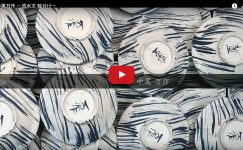
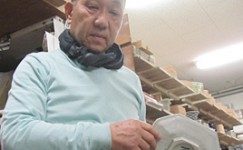
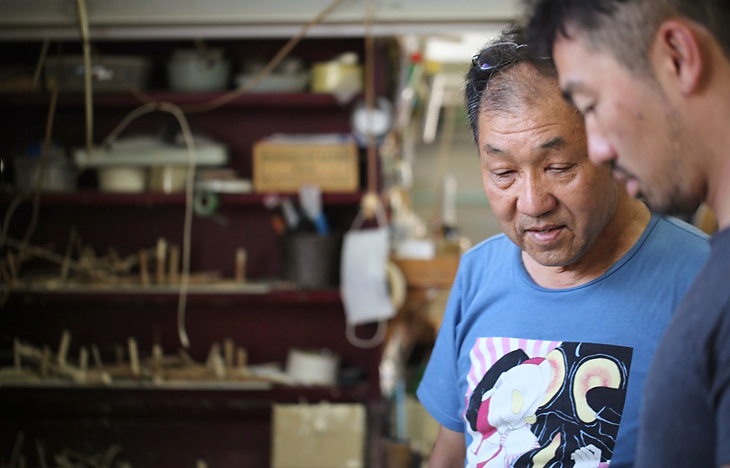
Hanada visited Mansaku Nakao’s studio in July, right in the middle of production ahead of his annual August exhibition, which has now become a summer tradition. On a hot day, the studio had just finished a large batch of bisque firing and had begun painting. Shelves were gradually filling with Nakao’s lively works, full of his playful energy. The interview unfolded in a relaxed tone and direct expressions, with constant laughter throughout.
From knowing nothing at all…
Hanada: Man-san (everyone calls Mansaku Nakao “Man-san”), you originally worked in hand-painted Yuzen dyeing, and later entered the ceramic world after meeting Hideo Hata, correct?
Mansaku Nakao: I worked at a hand-painted Yuzen studio in Ito, Shizuoka, where I designed patterns. That’s where I met Hideo Hata.
Hanada: Did you already know what kind of work Hata was doing at that time?
Mansaku Nakao: Not at all. He just looked like an ordinary old man. Though there was something unusual about him—you couldn’t quite tell what he did. I was already getting tired of textile work, and the timing was right when he said, “Ceramics might suit you.”
Hanada: So you joined Kutani Seiyō. Did you study ceramics before joining?
Mansaku Nakao: Not at all. I knew nothing about ceramics.
Hanada: So you started from zero?
Mansaku Nakao: Exactly.
Hanada: Something like, “Try throwing on the wheel first”?
Mansaku Nakao: No, I didn’t start with the wheel. Thanks to my previous job, I could paint from the beginning. At Seiyō at the time, there weren’t many people who could paint, so I just kept painting on blanks made by others. From one end to the other.
Hanada: So painting was your main role from the beginning.
Mansaku Nakao: I thought that was normal. Then about six months later I met Hata again, and when he found out I wasn’t throwing on the wheel, he scolded me quite seriously. “Why aren’t you throwing?” he said. At the time, I thought painting was higher status than throwing. I didn’t want to touch clay—it made my hands dirty.
Hanada: That’s funny. It’s good he told you.
Mansaku Nakao: But once I started throwing, it was interesting. I got completely absorbed and started producing more and more. Eventually I told everyone, “From now on, you should paint your own forms.”
Hanada: That’s quite a self-willed decision.
Mansaku Nakao: Then everyone else started painting too, and each person’s individuality began to show.
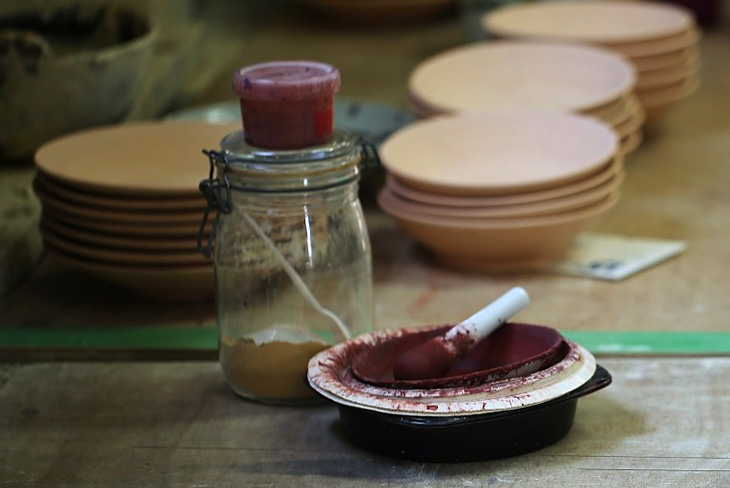
What should be conveyed through what we make
Hanada: Kutani Seiyō was founded around the time I was born, and it was truly a pioneer of handmade everyday ceramics.
Mansaku Nakao: At that time, that kind of work wasn’t common. The media had also begun to feature crafts more, and the way of thinking around them was spreading socially.
Hanada: I visited as a child with my father and still remember the strong energy there. It was a period of momentum and collaboration among young makers.
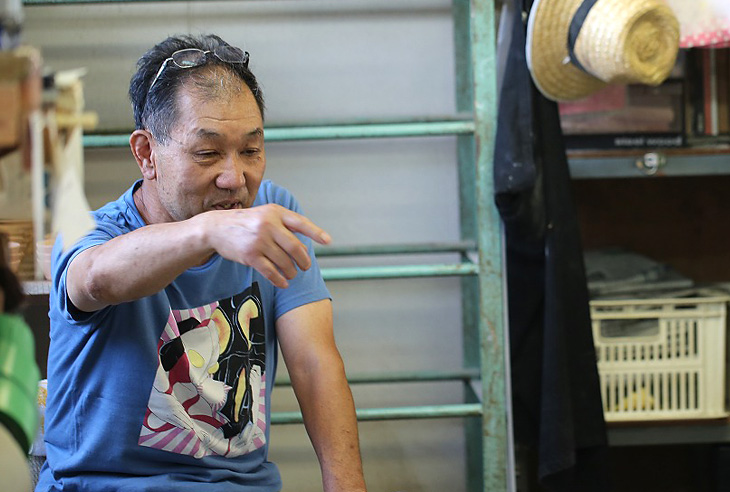
Mansaku Nakao: We were just doing whatever we wanted.
Hanada: I still have some pieces at my family home—possibly yours. I always think, “This must be Man-san’s.” They feel full of energy.
Mansaku Nakao: Maybe they weren’t technically perfect, but everyone was overflowing with energy, and that came through in the work.
Hanada: Seiyō now has many more female makers as well.
Mansaku Nakao: Yes. Men tend to get caught up in pride and theory. Especially art-school types. They talk too much about ceramics theory—no one is listening. It’s not a lecture hall.
Hanada: That’s very direct.
Mansaku Nakao: Those things are just basics. You don’t impose them on others. What matters is what you express through what you make.
Hanada: You don’t really talk about theory, do you?
Mansaku Nakao: I don’t enjoy those conversations. They go in circles.
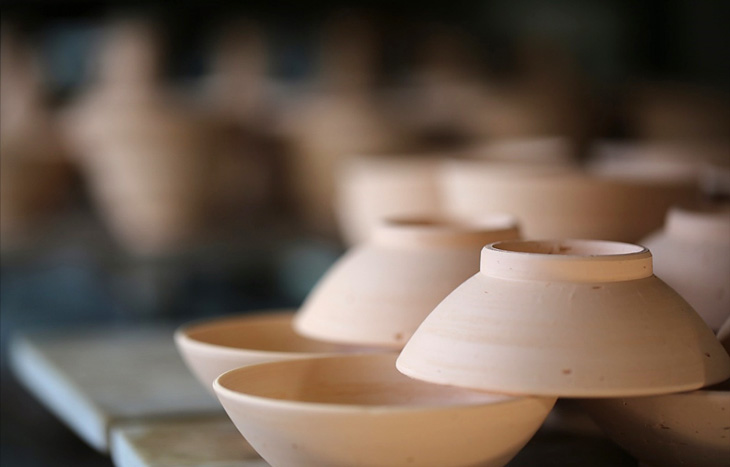
What is a maker?
Hanada: You were at Seiyō for 16 years before becoming independent. Where does the name “Seiseikyo” come from?
Mansaku Nakao: I thought of it before becoming independent. It comes from The Little Prince—the place where the prince lives. That’s why I named it Seiseikyo.
Hanada: (laughs)
Mansaku Nakao: It’s fine, isn’t it?
Hanada: It’s been 28 years since independence. Almost 30.
Mansaku Nakao: I became independent in the first year of the Heisei era.
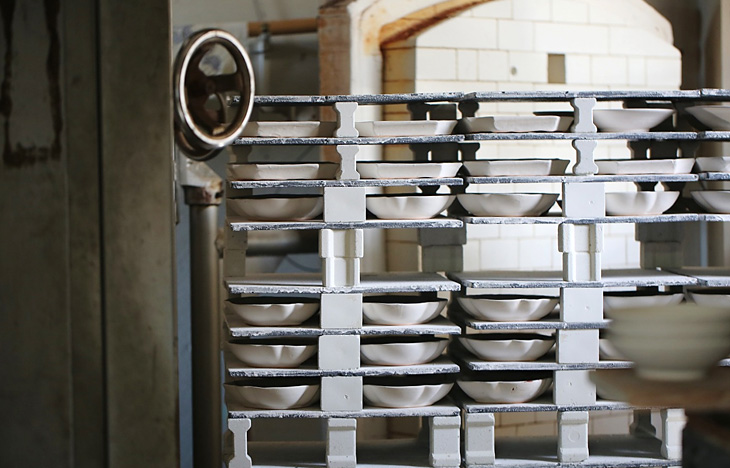
Hanada: What do you value most when making work?
Mansaku Nakao: Fundamentals. Preparing clay properly, firing properly…
Hanada: The foundation supports everything that follows.
Mansaku Nakao: Exactly. Like a building—the base must be solid. I also modify clay partly to prevent copying. People will always try to imitate work, so I embed elements that make copying difficult.
Hanada: Your work has a distinctive feel—firmly fired, yet with soft glaze. It doesn’t seem easily reproducible.
Mansaku Nakao: Every maker tries, in their own way, to protect originality. That’s what a maker is: someone who creates something original and protects it.
Hanada: How do ideas emerge?
Mansaku Nakao: They come continuously. When I worked in kimono design, I had to come up with several patterns a day. That habit stayed with me.
Hanada: What did you draw in the beginning?
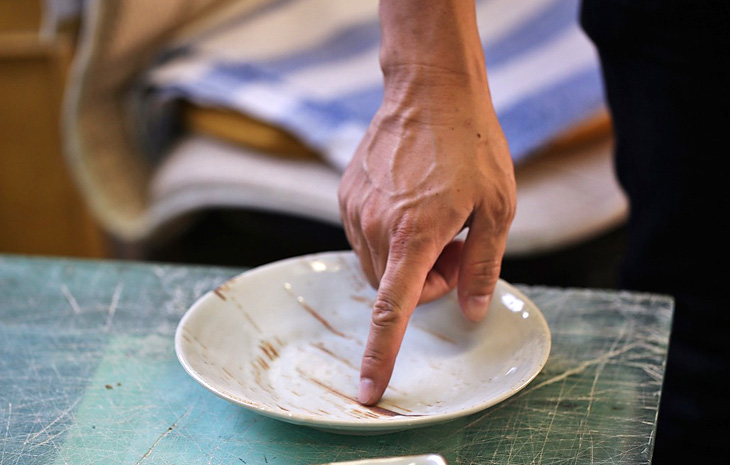
Mansaku Nakao: Autumn grasses, flowers—quick, loose strokes.
Hanada: That flowing pattern has been there since early on.
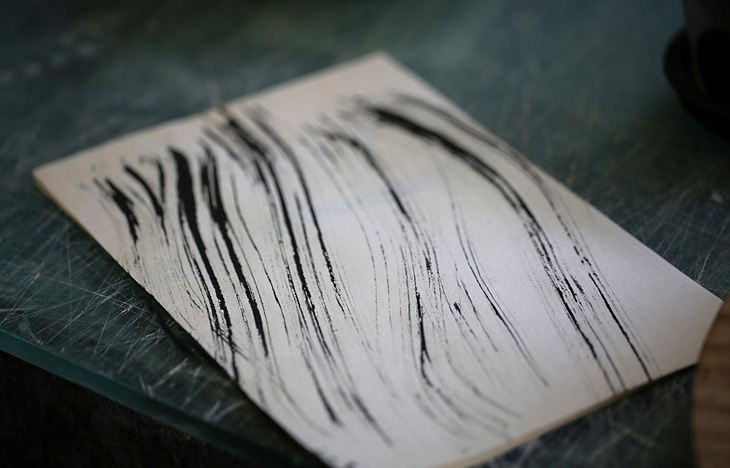
Mansaku Nakao: Yes. I also made my own tools to draw them.
Hanada: So. Your clients have supported you for decades. You also seem to value a sense of hospitality.
Mansaku Nakao: It’s not so much about pleasing others. I simply enjoy making things. I’m always thinking about new work—while walking, eating, even in dreams.
Hanada: You’ve been enriching many people’s meals through your work.
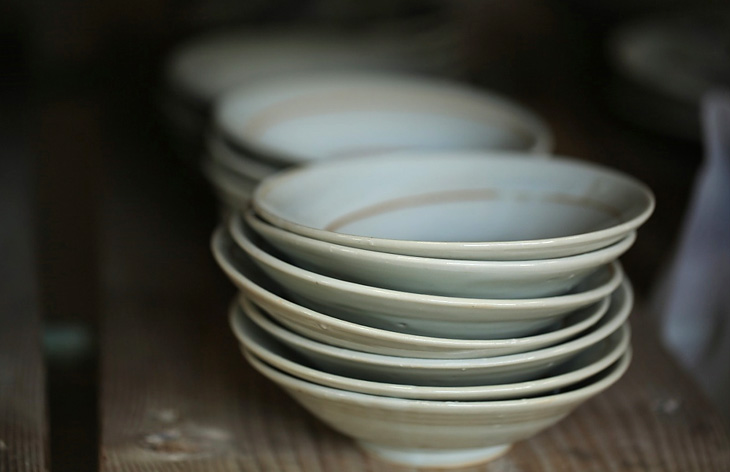
The cupboard is my museum
Mansaku Nakao: Recently something nice happened. A cooking teacher, Shigeko Nakamura, called me. She said she found many of my pieces while renovating her house and told me, “You used to make really good work.”
I think of the customers’ cupboards as my museum. My work lives on their tables, in their daily lives.
Hanada: What does food mean to you?
Mansaku Nakao: A moment of gratitude for being alive. Eating happily is the most important thing.
Hanada: What do you want to do going forward?
Mansaku Nakao: Continue as long as I can, without changing.
Hanada: Any message for younger makers?
Mansaku Nakao: You improve by making a lot. Keep refining your sensibility. Be interested in everything—from low-grade to high-end. Nothing is wasted in life.
Hanada: Lastly, any message for your exhibition?
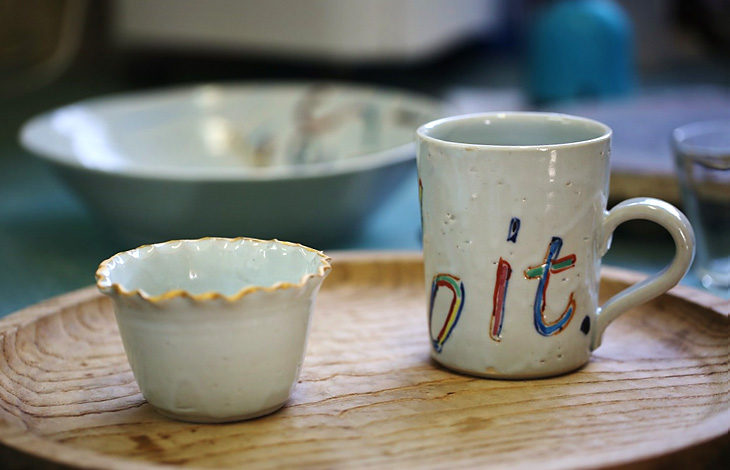
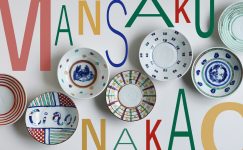
Mansaku Nakao: I made several pieces of this kind. “I can do it.” There are also plain ones with gold accents. I’m looking forward to showing them.
Hanada: Thank you very much.
≪ END ≫
花田8月の恒例となりつつある中尾万作さんの個展に向けて、制作真っ只中の7月に万作さんの
工房を訪ねました。夏日の中、大量の素焼きを終えて絵付けを始めていた工房は
万作さんの楽しさ溢れるうつわが棚に次々と埋まっていく、いきいきとした様子が伺えました。
気取らない口調に、ストレートな表現でテンポ良く話す中尾万作さんのインタビューは、
笑いの絶えない時間となりました。
なんにも知らないところから・・・
花田: 万さん(中尾万作さんはみんなから「万さん」と呼ばれ親しまれています)、
最初は友禅の仕事をされていて、秦秀雄さんとの出会いをきっかけに焼き物の世界へ入ってこられたのですよね。(以下 花田-)
万作: 静岡伊東の手描き友禅の工房で絵柄を考える仕事をしていて、
そこで秦秀雄さんとも出会った。
-: 最初から秦秀雄さんがああいう仕事をされていることは知っていたのですか。
万作: いや、最初はただのおじいちゃん。
「この人、何やっているんだろう」って思わせる不思議な雰囲気はあったけど。
着物の仕事が嫌になっていた頃で、
「焼き物なんか、お前に合っているかも分からんぞ」ってタイミングよく声掛けてくれて。
-: で、九谷青窯入社。入社時、焼き物の勉強はどうされたのですか。
万作: 何もしてないよ。焼き物のことなんて、なんにも知らない。
-: えー(大笑)!行ってからですか?
万作: そう、行ってから。
-: 「じゃあ、ロクロひいてみるか」って感じですか?
万作: いや、ロクロは最初していなかった。
前職のおかげで、絵付けは最初から出来たし、当時青窯には絵を描ける人がそんなにいなかったから、俺は仲間が作った素地に、端から絵を描いていった。ドーッて。
-: 最初から、絵付けが万さんの仕事の柱になっていたのですね。
万作: それが、当たり前だと思っていた。
それで半年後秦秀雄さんに会って、ロクロひいてないって言ったら、
えらく叱られちゃってさあ(笑)。「なんでひかないんだ!」って。
当時はね、絵を描く仕事が、ロクロの仕事より格が上だって思っていたんだね。
土なんか触って、手がドロドロなるのなんて嫌だって思っていた。
-: 笑える!よかったですね、言ってもらえて。
万作: でもさ、ロクロ始めたらさ、面白いんだよ、これが。
どんどん作り出してね。そうしたら他の人が作った素地の絵付けにまで手が回らなくなってきた。
「今後は自分のひいたものは自分で絵付けしろ」ってみんなに言って。
-: 自分勝手もいいところじゃないですか(笑)。
でも、そういう言動が受け入れられる青窯って、なんかいいですね。
万作: そうしたらね、みんなも描いてみたら面白かったんだね。一人ひとりの個性が出始めた。
作り出すもので伝えられるべきこと
-: 九谷青窯は、僕がちょうど生まれた頃に出来たものだし、
手作りの暮らしのうつわの、まさにパイオニアですよね。
万作: それまではそういうものが一般的では無かったからね。
ちょうどメディアも工芸を取り上げだした頃だったし、そういうものや考え方が、社会に広がっていった時期なんだと思う。
-: 小さい頃、父親に連れられてたまにお邪魔していましたけど、すごい活気を肌で感じたのは覚えています。
仲間たちが志をともにして・・・活気のあった勃興期ですね。
当時のエネルギーあふれる若者たちの武勇伝はよく聞きます。
万作: 自分勝手なことばかりしていたからねえ。
-: 今でも、僕の田舎の家には、当時万さんが描いたと思われる、網手の皿なんかありますよ。
たぶんこれ、万さんだなあって思って使っています。
あの頃の九谷青窯のものってパワーを感じるんですよね。
万作: もしかしたらそんなに上手くはなかったのかもしれないけど、みんなエネルギー有り余っている中で作っているから、うつわにも勢いやそういう力を感じさせるものがあるんだろうね。
-: 今では青窯も女性の作者が増えてきました。女性が活き活きと仕事されています。
万作: そうみたいだね。
だって、男はプライドとかなんとか、そんなことばかり言うからね。
陶芸論なんかを、ベラベラしゃべって。特に芸大系ね(笑)。
だれもそんな話、聞いていないよ。土がどうのこうとか、工芸とは・・・とか。
美大の授業じゃないんだからさ。
-: 万さんは、ストレートだなあ(笑)。
万作: それはね、他人に話す以前の基礎であって、他人に押し付けがましく言うようなことじゃないし、自らが作り出すもので伝えられるべきものだと俺は思っている。
-: そういえば、万さん、あまりそういう話、しないですね。
万作: 面白くないんだよ、話していて。
どうせ堂々巡りだろ。
-: (大笑)
作家とは・・・
-: 万さんは青窯に16年いて、独立されたんですよね。
工房名である星々居の名前の由来は?
独立する前から考えていたんだ。
星の王子様が住んでいるところ、で星々居ってしたんだよ(笑)。
-: (大笑)万さん、星の王子様のつもりだったんですか。
万作: いいだろ、別に(笑)。
-: 独立してから28年。もう少しで30周年ですね。
万作: 平成元年に独立したからね。
-: 万さんがうつわを作りながら大事にしていることはありますか。
万作: 基礎だね。粘土をちゃんと準備する、窯をしっかりたく・・・
-: ベースを大事にすることこそが、その上に載る万さんのダイナミックで華やかな仕事を成立させる。
万作: 建物と一緒で、土台や骨格がしっかりしていることが大前提。
色々なものを載せるために、素地作りをちゃんとするということなんだ。
あと、粘土に色々手を加えるのは、ひとつはコピーをされないための、防止策でもあるんだ。
コピーをしようとする人間はいつでもいるからさ。中に色々仕掛けをしておけば、簡単にはコピーできないから。
-: 万さんの焼き物って触ると、カリッとした、古染付ともまた違うんですけど、焼ききれている感じで、でも釉は柔らかくテロッとした感じなんですよね。
まあ、そもそも万さんの仕事はコピーできる類の仕事じゃないような気がしますけどね。
網だって、花散らしにしたって。このI can do it だって(笑)。
万作: 作り手はみんな、程度の差はあれ、そういうことを考えてやっていると思う。
自分のオリジナルを作り上げる、そして簡単に真似できないように自分で守っておく。
それが作家だよ。自分のオリジナルを出来るやつが”作家”だよ。
-: 長年やってきて、お客さんに受け入れられてきた万さんならではの言葉ですね。
万さんが新しいものを作り出すとき、どんな感じで生まれてくるのですか。
万作: ドンドン出てくるよ。
着物の仕事をしていたときは、一日に少なくとも二枚か三枚かは絵柄を考えなければいけなかった。
そういうことが10年も続くと、そういうものの構想の仕方が習慣づくようなところがあってね。
あまり苦にはならない。
-: 最初はどんな絵を描いていたんですか?
万作: 秋草とか、花とか。シャシャッとした感じの。
-: あの流水文なんかは初期からありますよね。
万作: そうだよ。道具も色々考えてね。これで描いているんだよ。
-: あのザッとした感じは、これで出るんですね。
万作: そうそう、こうやってさ。
道具もオリジナルのものたくさんこさえたよ。
-: さて、万さんのお客さんには、独立時からずっと万さんを応援してくれている人がたくさんいますよね。
そして、万さんの仕事のベースには、生まれもったサービス精神があると思う。
万作: ・・・(沈黙)
-: あれ、そんなことなかったですか(笑)。
人を自然に喜ばそうとしているように見えます。
人の笑顔を、素直に自分の喜びにできる。
万作: そのお客さんを喜ばそうっていうより、自分が楽しいんだよ、作っていて。
仕事にのめりこめるんだ。他に趣味が無いんだよ(笑)。
例えば、次に作るものや新作については、絶えず考えているし。
散歩していても、食事していても・・・多分、夢の中でも考えている。
どこかにコーヒー飲みに行ってもね。多分そういう脳みそなんだよ。
-: そうやって、多くの人たちの食事の時間を楽しくしてきたんですね。
食器棚が自分の美術館
万作: そうそう、この間、うれしい事があってね。
料理の先生をしている、中村成子さんから突然電話がかかってきたんだ。
家を改造していたら、俺の食器がいっぱい出てきたんだって。
それで、俺に電話してきてくれたんだけど
「あなた、いいうつわ作っていたわねー」って言うんだよ。
-: うれしいですねえ。
万作: 俺はね、買ってくれる人たちの食器棚を自分の美術館って思うようにしている。
俺の仕事の生き場所はあの人のテーブルの上であり、あの人の食器棚なんだ、って想像するんだ。
-: それでは、万作さん自身にとって食事とは?
万作: やっぱり、生きているってありがたいなって思う時なのかな。楽しく食べることが一番。
-: これからしていきたい仕事ってありますか?
万作: 今まで通り変わらず、できるだけ長く続けたい。
-: 好きで始めた仕事ですからね。
さて、花田では8月の万さんに始まって9月林京子さん、
10月藤塚光男さんと九谷青窯の仲間の個展が続きます。同窓会です。
その方たちへエールを送ってもらうこと出来ますか?
万作: それじゃあ、潰し合いじゃないかよ(笑)。
-: 仕事がみんな全く違いますから、大丈夫ですよ!
あと、突然なんですが、若手の作り手の方たちへのメッセージをなにか頂くことできますか。
万作: 数をたくさん作らないと上手くはならないんじゃないかな。
そして、絶えずセンスを磨くこと。
あらゆる物事に興味を持つ。下手なものから高級なものまで。無駄なことは無いから。
そう、無駄なことなんてひとつもないよ、生きていて。
-: 個展に向けて、何かお願いします。
万作: この手のもの、何点か作ってみた。
I can do it。
無地もあるよ。ちょっとここに、金彩してね。
色々作っているんで、皆さんに見てもらうのが楽しみ。
-: 有難うございました。
関連記事はこちら