






English version of the article here.
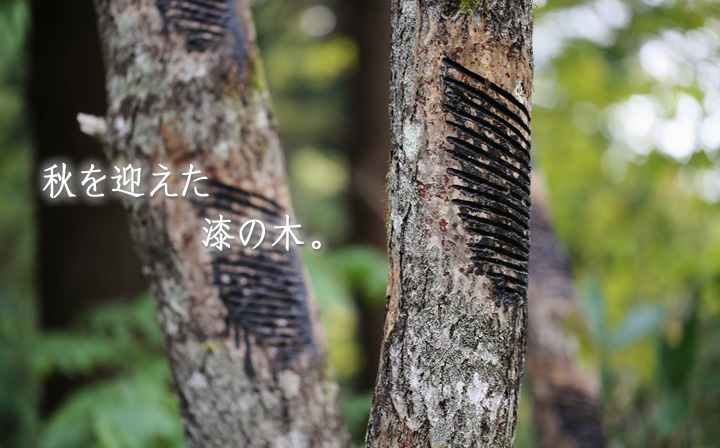
In late autumn, we attended Kyōshinkai, a lacquer evaluation exhibition held in Jōbōji, Iwate Prefecture.
We went to inspect the raw lacquer harvested in Jōbōji in 2017 and to see the lacquer trees as the tapping season was coming to an end.
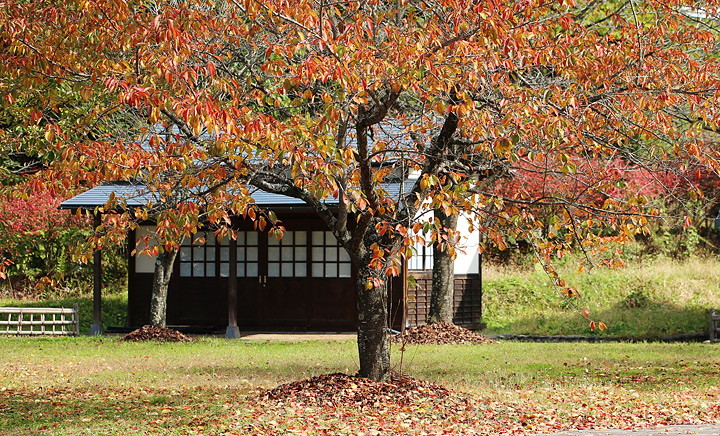
The cherry trees were already turning vibrant shades of red.
Since the cherry blossom trees in Kudan Tokyo, had not turned yet, the vivid red of the leaves stood out strikingly.
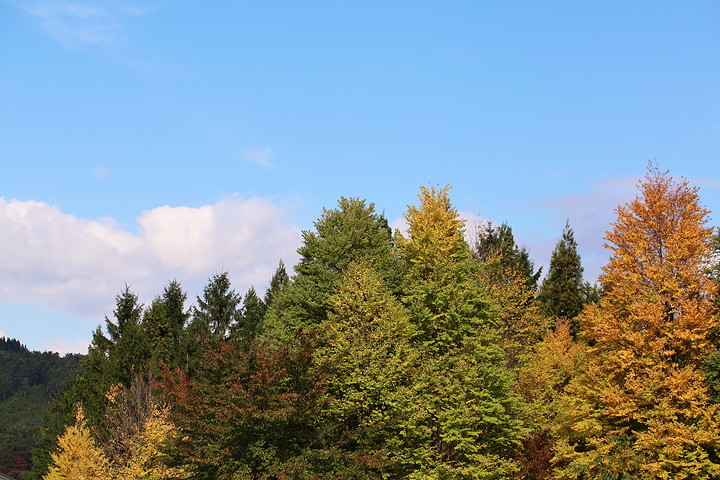
Under a clear, crisp autumn sky, many people visited the venue of the Jōbōji Urushi Kyōshinkai.
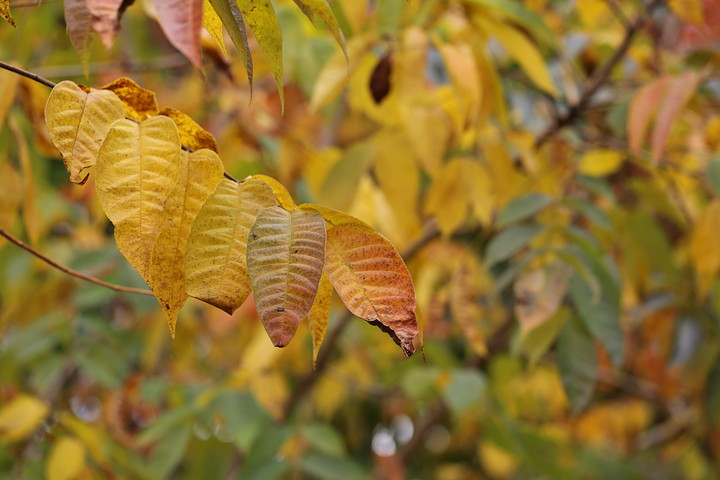
A lacquer tree standing in front of the workshop.
Its leaves are characterized by a slightly elongated shape, similar to those of a chestnut tree.
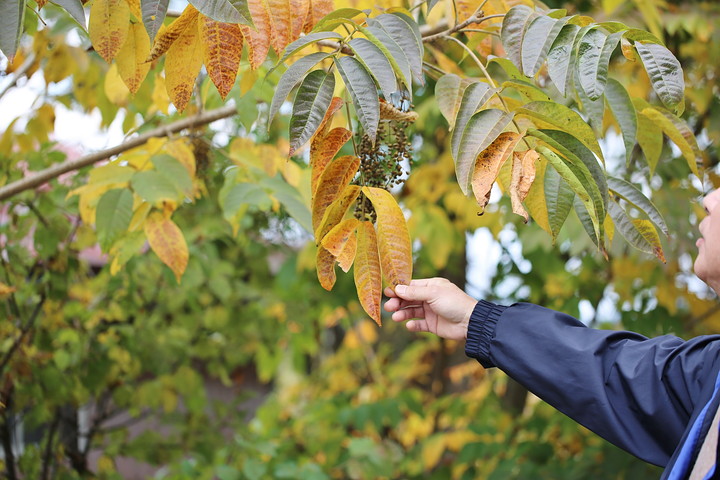
“Look, the colors are starting to change, though it varies depending on the spot,” we were told.
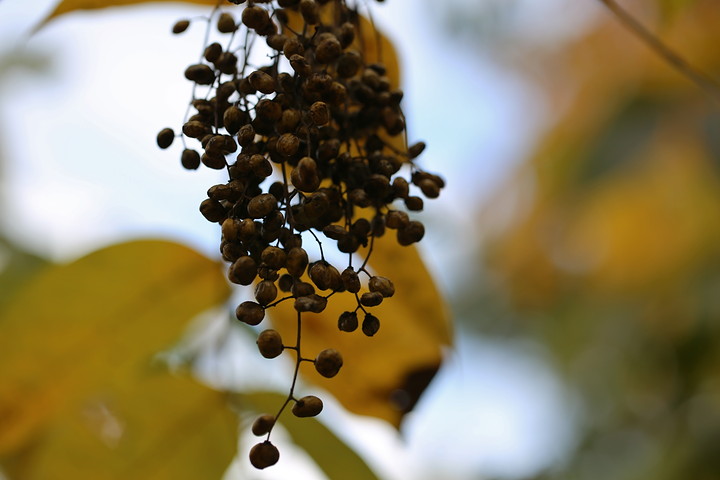
These are lacquer berries.
They grow in clusters, much like bunches of grapes.
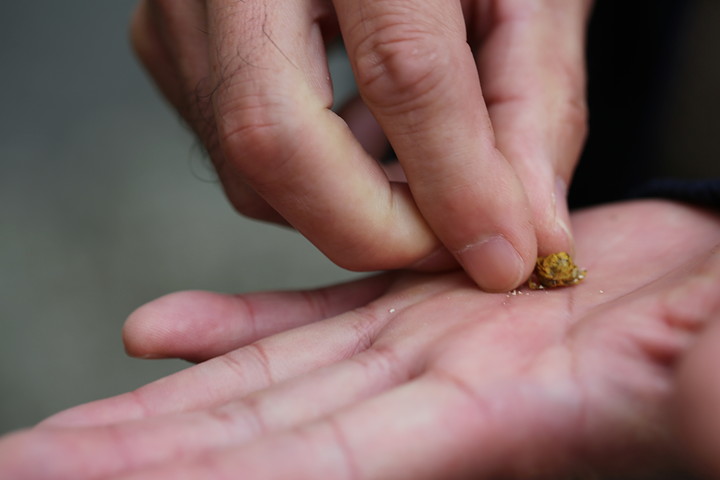
Picking a berry and removing the shell.
From the Edo period to around 1955, these seeds were used as raw materials for candles and hair pomade.
Recently, they are sometimes roasted to make coffee.
It is interesting to see how their uses evolve over time.
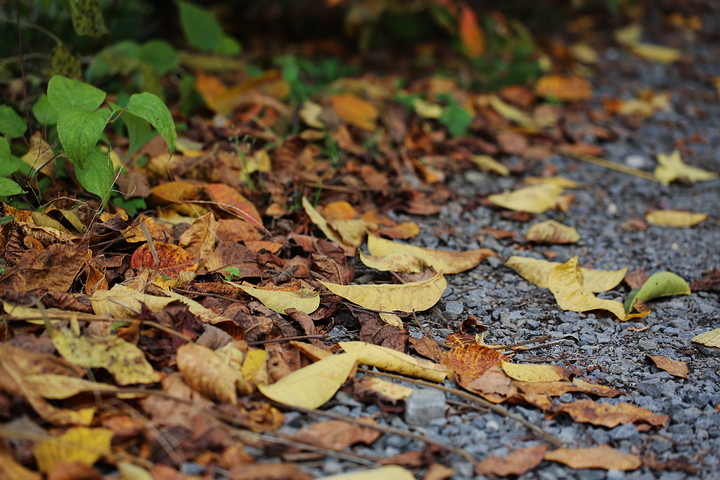
In some areas, the autumn colors had ended, and leaves had begun to fall.
“Fallen leaves like these turn into humus and return to the mountain,” we were told.
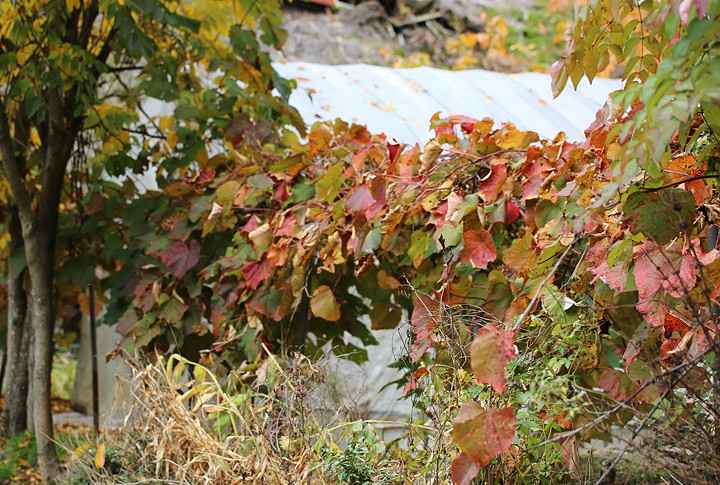
“What are you taking a picture of? That’s a wild grape vine!”
Apologies—I was simply drawn to the bright red.
Indeed, lacquer leaves are not this shape.
It was a grape leaf, a motif we are so familiar with on Ceramics!
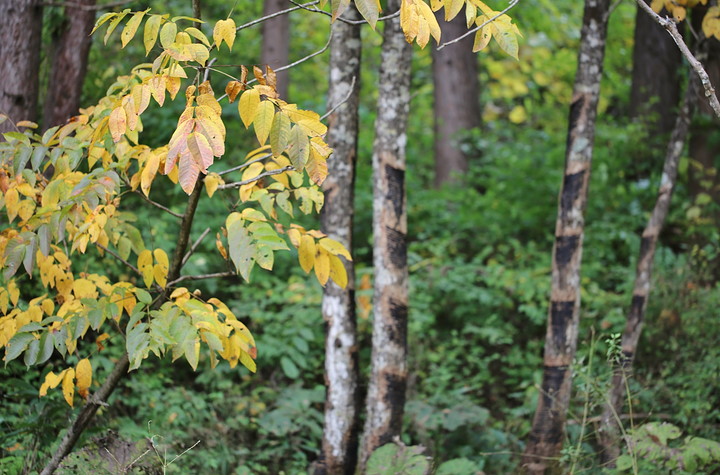
“Shall we take a look at the lacquer forest?” we were invited.
When we visited last year, it was early summer, just as the tapping season was about to begin.
The lacquer trees now stood in a completely different landscape.
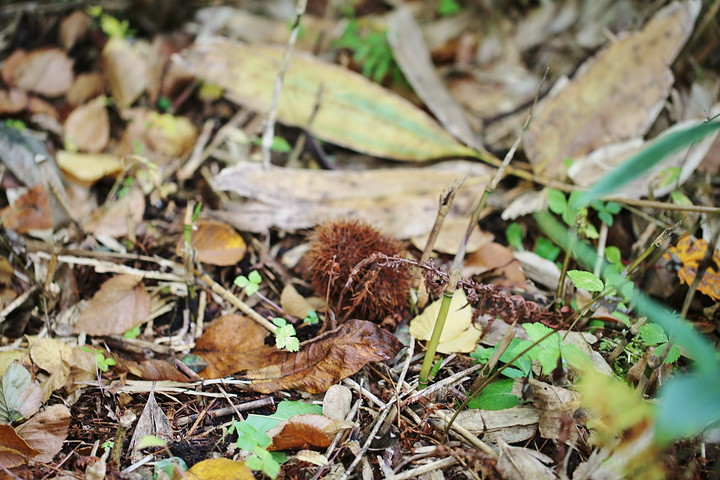
Chestnut burs were scattered everywhere, making the walk feel like a forest excursion.
The crunching sound of dry leaves underfoot felt like the true arrival of autumn.
Suddenly curious, I asked,
“There aren’t any bears around here, right?”
“No, it’s fine. The bears are gone now.”
I wondered if I should have asked…
I was not quite sure whether to feel relieved or not…
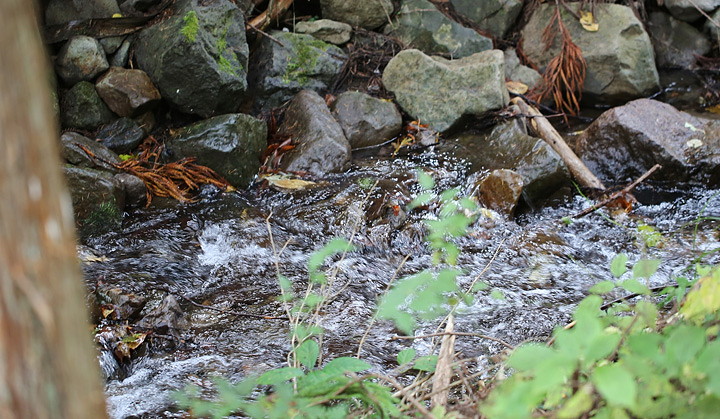
The lacquer forest sits halfway up the mountain. Just below the path, a river was flowing.
“You can catch Japanese char here,” we were told.
“No fishing rod needed, they gather right here, so you can easily scoop them up with a net.”
It was a stream full of treasures, known only to someone who truly knows the best spots.
I peered into the water for a while…
but of course, they were not that easy to find.
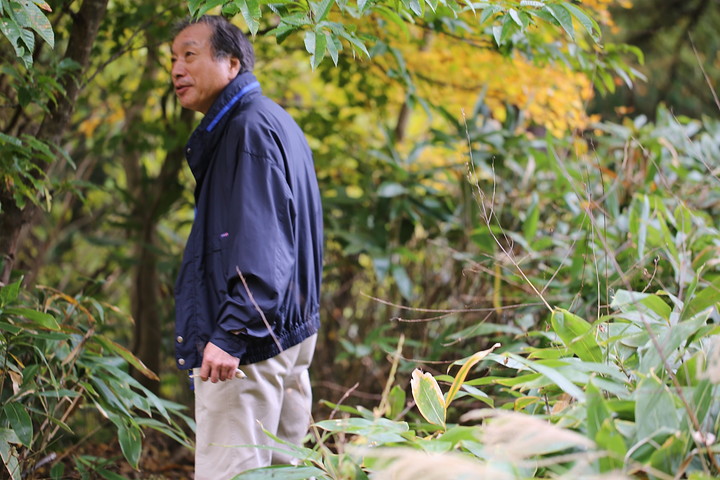
“We’ve finished harvesting most of the lacquer for this year,”
he said, walking briskly through the familiar forest.
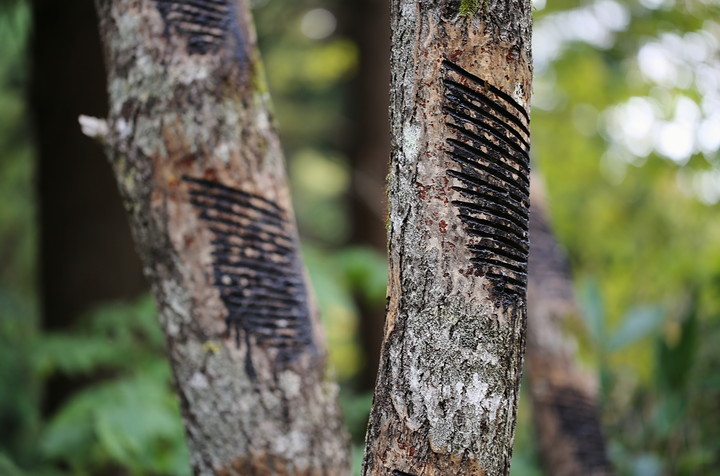
Lacquer tapping, which begins in mid-June, reaches its conclusion in October.
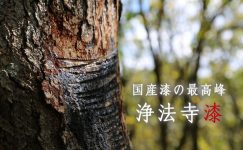
There were many lacquer trees with dark cuts remaining from top to bottom.
It takes 8 to 13 years to grow a lacquer tree before harvesting.
Through a technique called koroshigaki, all the sap is harvested in a single year, and the tree is cut down.
However, sprouts growing from the stump are nurtured, repeating the same cycle over the next decade.
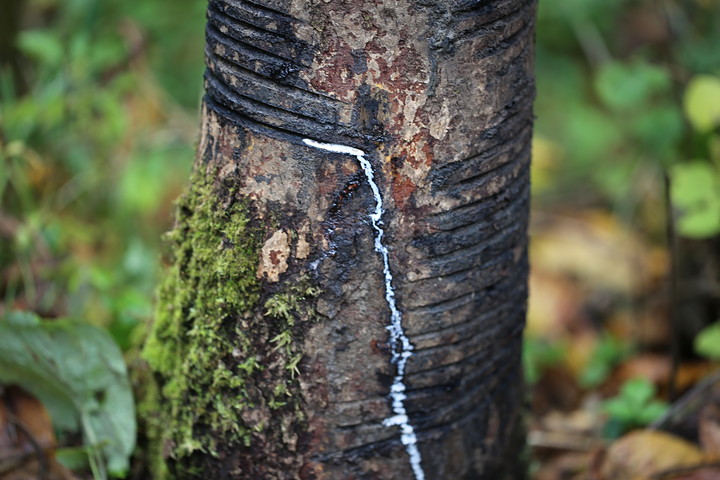
“Look, the lacquer is coming out here.”
A thin white streak of lacquer was trickling down, as if the very last drops were oozing out.
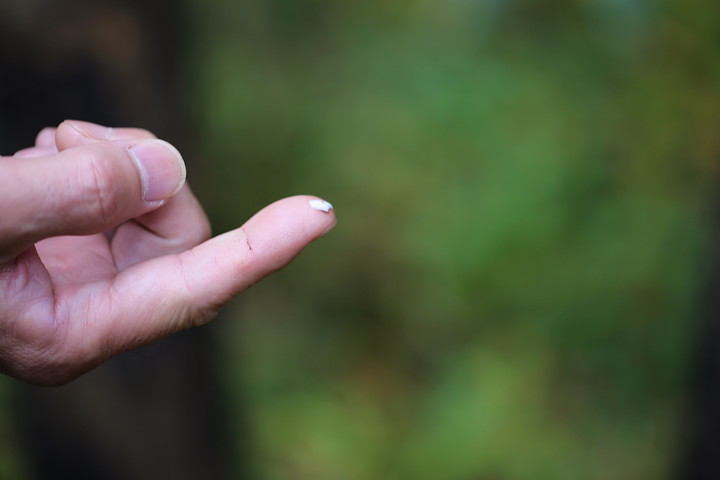
“See, this is lacquer,”
he said, touching the lacquer with a finger effortlessy.
I could only imagine what would happen if I tried to do the same.
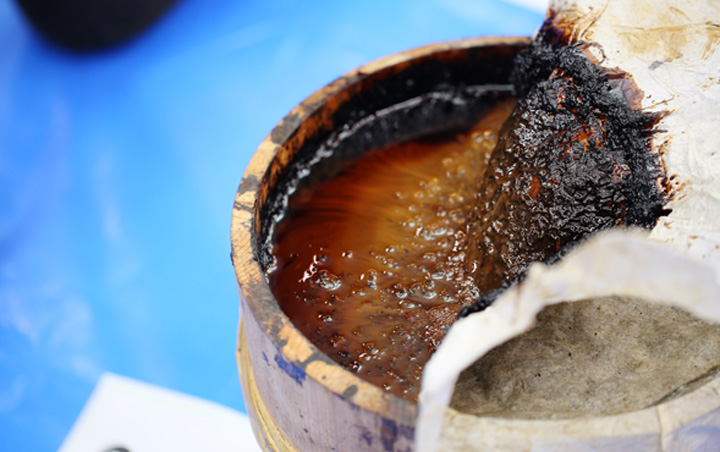
The effort required to collect every single drop until it fills a barrel of two kan (about 7.5 kg) is immeasurable.
Every drop is harvested with great care, leaving nothing to waste.
This lacquer will be used to restore Important Cultural Properties of Japan,
and will reach our dining tables as Jōbōji lacquerware.
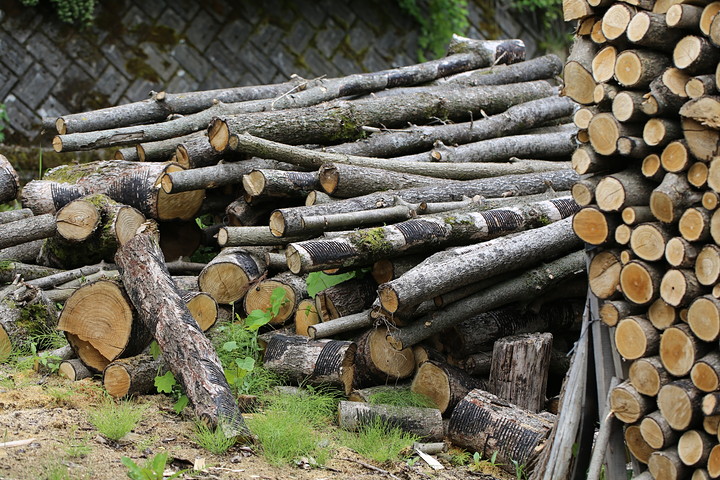
The cut lacquer trees.
Most of them are used as firewood.
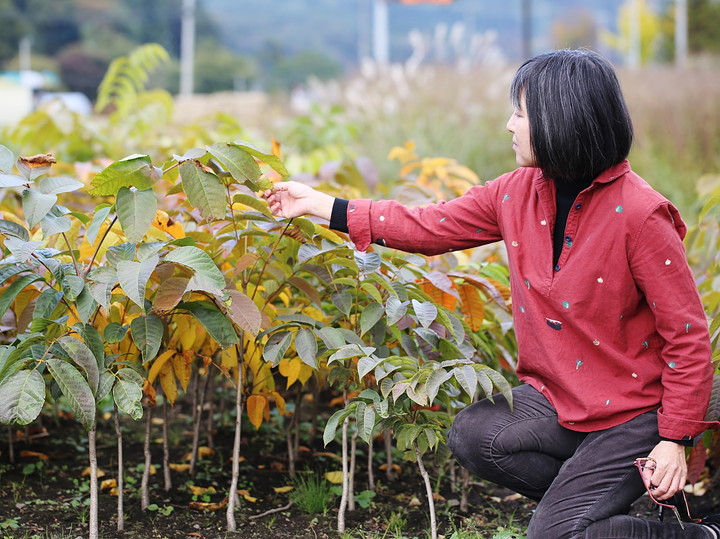
Afterward, we were guided to a nursery where lacquer saplings were being grown.
The saplings were still only about 50 to 70 cm tall.
“Once the autumn colors progress a bit more, all the leaves will drop. We cover them with straw to protect them from the snow so they can survive the winter.
Then, as they grow, we transplant them to the mountain,” we were told.
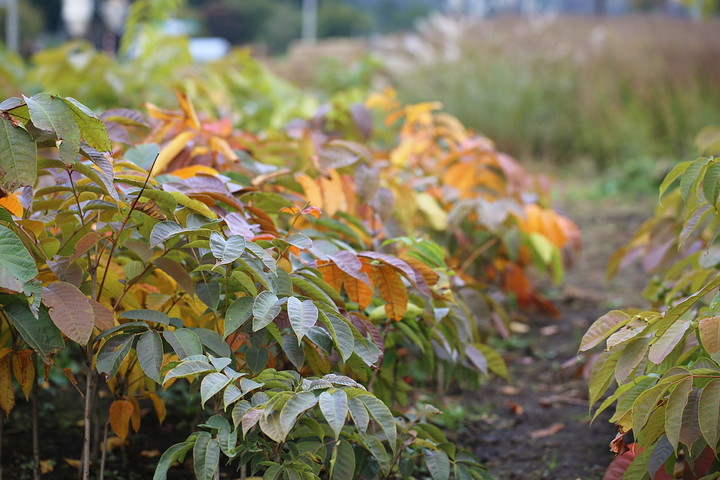
Unlike the scene we saw on the mountain earlier, the leaves here were soft and visibly young.
Although a lacquer painter, there had been participation in activities to protect and raise these lacquer trees.
I hope these carefully nurtured saplings safely make it through the winter.
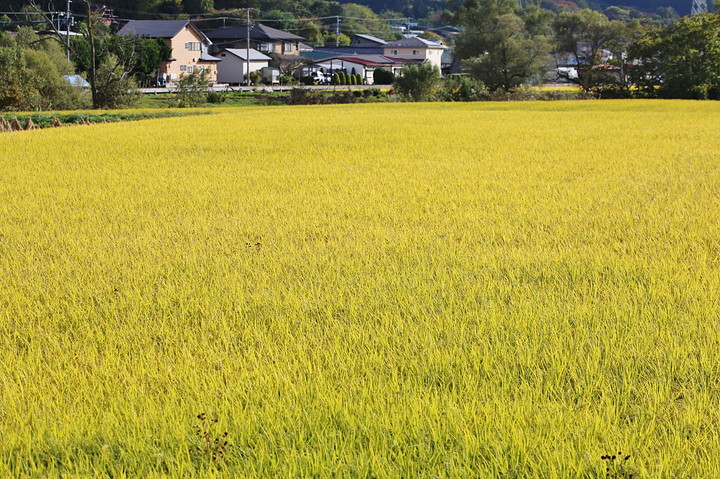
It was rice harvest season.
Illuminated by the autumn sunlight, ears of rice spread out as far as the eye could see in a dazzling expanse.
Stopping the car, we shared a quiet moment gazing at the view…
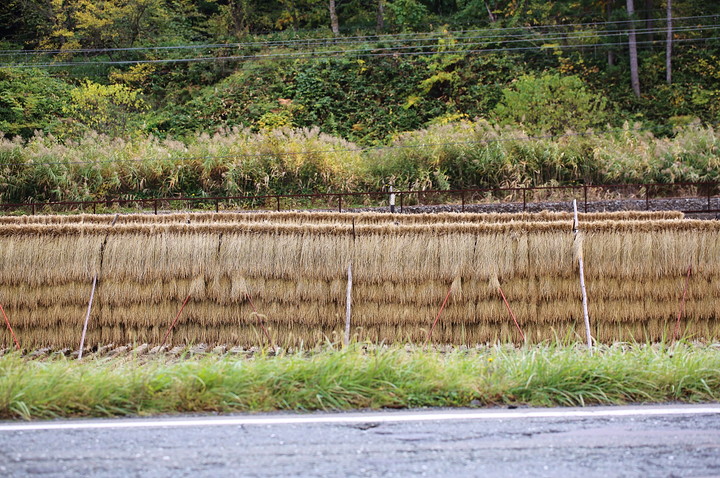
Scenes like this could be seen here and there.
Just like the lacquer trees, the rice fields have finished their work for the year
and are preparing for the next season.
秋深まる、岩手県浄法寺で行われた漆の品評会「共進会」
2017年採取の浄法寺産の生漆を見るとともに
漆掻きの時期が終わろうとする、漆の木を見てきました。
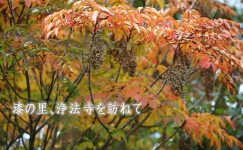
桜の木は早くもこのような紅葉の進み具合。
九段の桜はまだまだでしたので、葉の赤が鮮烈に感じました。
カラリと晴れ渡る空。
秋晴れの中、浄法寺漆共進会会場には大勢の方々が訪れていました。
岩舘さんの工房前の漆の木。
栗の木の葉のように、葉はやや長めの形状が特徴です。
「ほら、色づいてきてるでしょ。場所によって紅葉の進み具合が違うけどね」
と説明してくださいました。
これは漆の実です。
葡萄の房のような成りかたですね。
一粒もいで、殻から実を取り出す岩舘さん。
江戸時代から昭和30年ころまで、蝋燭や鬢付け油の原料として用いられていたのだそうです。
最近は、焙煎してコーヒーにすることもあるのだとか。
時代によって活用法も少しずつ変化していくのですね。
紅葉が終わり、葉が落ちはじめていた場所ももちらほら。
「こうして落ちた葉が腐葉土になって、また山にかえるんだよ」と岩舘さん。
「どこ写真撮ってるの?それ葡萄の蔦でしょうが!」
すみません、つい赤に引き寄せられてしまいました。
そうそう、漆の葉はこの形ではありません。
うつわの文様で、普段から見慣れている葡萄の葉でした!
「漆林を見ていこうか」と誘ってくださいました。
昨年見たのはこれから漆を採り始める初夏の頃。
その時とはまったく違う風景の中に、漆の木が立っていました。
あちこちに毬栗が落ちていて、歩くだけで森の遠足気分。
カサカサと枯葉を踏む音は、まさしく秋の足音です。
ふと気になって
「岩舘さん、此処熊いませんよね」
「うん、大丈夫。熊はもういなくなった」
聞いてよかったんだろうか・・・
安心して良いのか悪いのか・・・
漆林は山の中腹。道のすぐ下には川が流れていました。
「ここね、岩魚が捕れるんだよ」
「竿も何もいらないの、此処に集まってくるからね。網で簡単にすくえちゃう」
というお宝の小川でした。さすが絶好のポイントをご存知です。
しばし目を凝らして見ていましたが・・・
そんな簡単に見つかる筈もありませんでした。
「今年の漆は殆ど採り終わったところだね」
と、歩き慣れた林の中をズンズン行く岩舘さん。
6月の中旬から始まった漆掻きは10月に入り、そろそろ終わりの時期。
幹の上から下まで「辺」の跡が黒く残る漆の木が何本もありました。
漆を掻くまでに、8~13年の年月をかけて育てた漆の木は
「殺し掻き」という手法で1年で漆を採り尽くし、木は伐採されますが
切り株から出た芽を育て、これからまた約10年をかけて同じ営みを繰り返していきます。
岩舘さん「ほら、ここに漆が出てる」
まるで最後の漆がにじみ出たように、漆の細く白い筋が流れていました。
「ほら、漆だよ」
と難なく指で漆に触れる岩舘さん。
真似したらどうなるんだろう・・・想像するだけで精一杯でした。
あの一滴一滴が、こうして二貫目の樽にまでに達するまでの労力は計り知れません。
大切に育てた漆の木から、一滴も無駄にせず採取しているのですね。
この漆が国の重要文化財の修復に、
そして浄法寺塗の漆器として私達の食卓へ届くのです。
伐採された漆の木
その多くは燃料として使われます。
この後、浅野奈生さんに漆の苗木を育てているところへ案内していただきました。
苗木はまだ50~70cmほどの高さです。
「もう少し紅葉が進んだら葉を全部落として、この上に藁をかけて雪から守り
越冬させるんです。そうして成長したものから順に山に植え替えるんですよ」
と教えてくださいました。
先ほど山で見た光景とは違い、まだ柔らかく、いかにも幼ない葉が茂っていました。
浅野さんは塗り師ですが、こういった漆の木を守り育てる活動に参加されたこともあるそうです。
大切に育てられている苗木、何とか元気に冬を越してほしいですね。
季節はちょうど稲刈りの時期。
秋の日差しに照らされて、一面眩しいほどの稲穂が広がっていました。
車を止めて、浅野さんと暫し見入った静かな時間・・・
こんな光景もあちらこちらに。
田んぼも漆の木と同様、今年の仕事を終えて
また次の季節に備えます。

関連記事はこちら