





English version of the interview here.
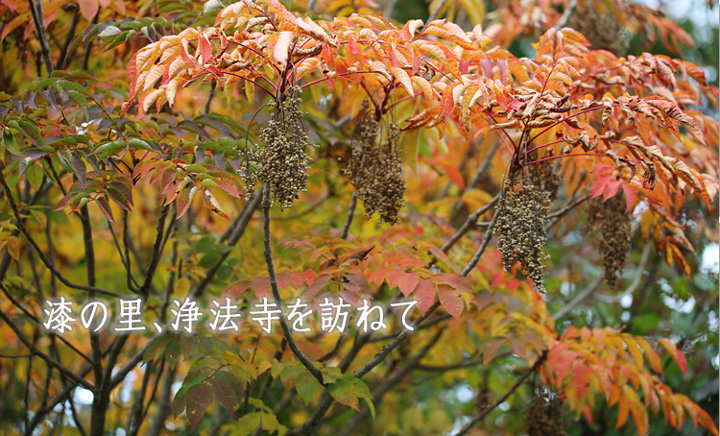
Visiting Joboji, the Homeland of Urushi
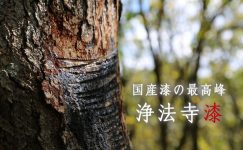
On October 15, 2017, I visited the Joboji Urushi Exhibition, co-hosted by Ninohe City and the Joboji Urushi Producers Association in Iwate Prefecture. This evaluation event brings together all the Joboji urushi harvested that year to carefully check the quality of each batch. Behind the high quality standards maintained for Joboji urushi—the peak of Japanese domestic lacquer—lies the tireless dedication of the many people involved in its production.
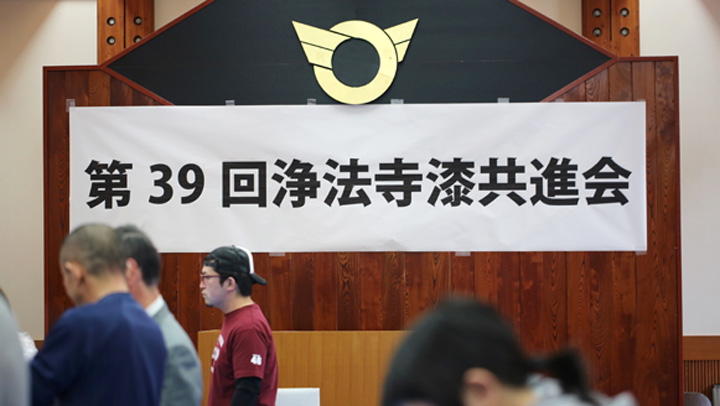
The Japanese name for this gathering, “Kyoshinkai,” carries a lovely meaning. While it is certainly an evaluation event, the name conveys a sincere and forward-looking spirit of striving for mutual improvement together. This warm, collaborative atmosphere became even more apparent as I observed the venue throughout the day.
The Life of an Urushi Tree
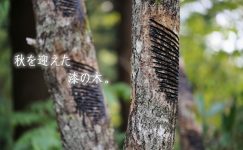
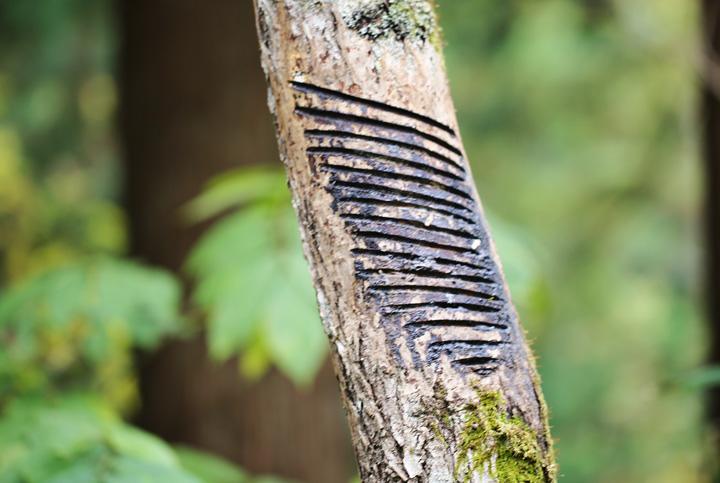
Domestic urushi is exceptionally rare today. While an urushi tree takes 8 to 13 years to mature, sap collection takes place over just a single year. Because the tree is completely harvested during that year, each tree requires careful assessment and highly skilled tapping techniques. Under the method known as “koroshigaki” (full extraction tapping), the tree dies once all the sap is harvested and is cut down that same year. However, new shoots sprout from the remaining stump, allowing the cycle to begin anew.
*The incisions made to harvest sap are called “hen” (cuts). Starting from the earliest cuts (usually at the lower part of the trunk), they are counted as 1-hen, 2-hen, 3-hen, and so on.
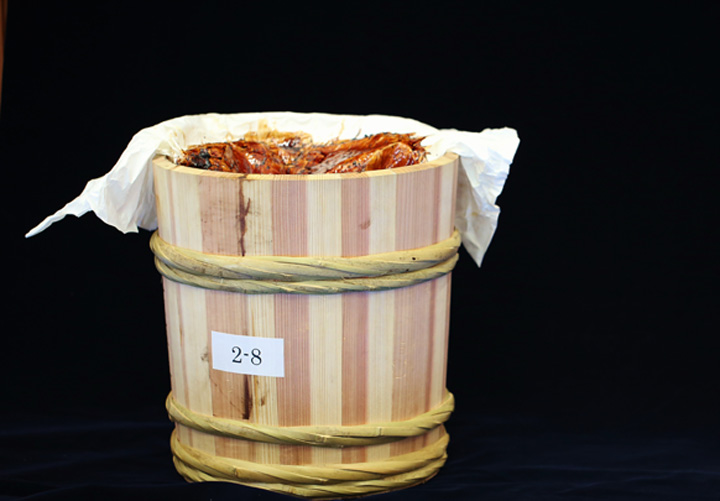
Barrels like these lined the venue, containing ki-urushi (raw, unrefined urushi) stored just as it was harvested.
Joboji urushi represents the pinnacle of domestic Japanese lacquer. Japan’s self-sufficiency rate for urushi is a mere 1 to 2 percent, and approximately 70 percent of that precious domestic supply is produced in Joboji, Iwate Prefecture. High in urushiol content, top-grade Joboji lacquer is indispensable not only for everyday crafts like soup bowls, but also for the restoration and preservation of Japan’s National Treasures and Important Cultural Properties. It is said that 1.5 tons of Joboji urushi were used in the restoration of Rokuon-ji (the Golden Pavilion) in Kyoto, and it continues to play a vital role in the ongoing conservation work for the “Heisei Great Restoration” of Nikko’s shrines and temples (Futarasan Shrine, Toshogu, and Rinno-ji).
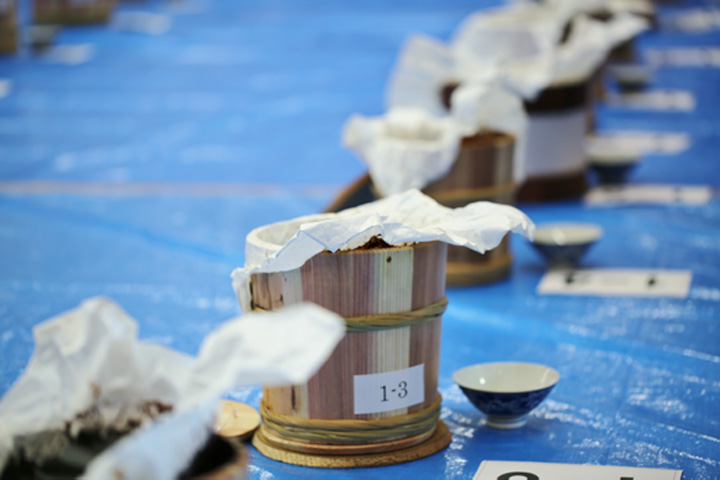
Rows of large and small barrels were arranged across the venue, awaiting inspection. Even within Joboji urushi, subtle variations in quality arise depending on the tapper who harvested it, as well as the climate of that year. Harvested entirely by hand, cut by cut, while responding to the forces of nature, every single barrel represents something truly precious.
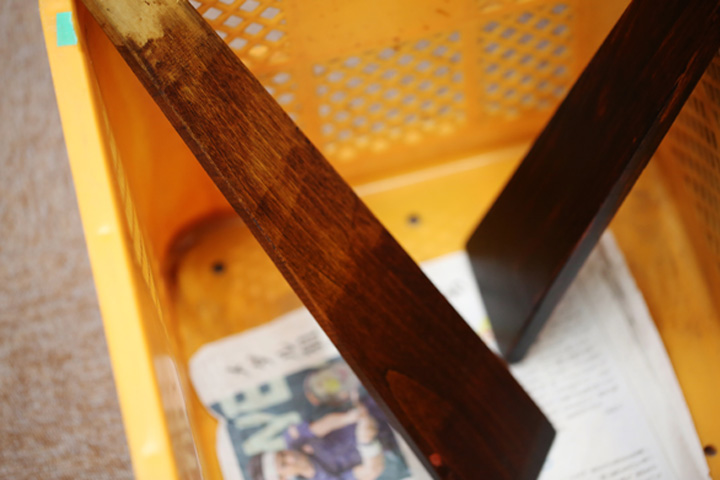
Here are the tools set up for the inspection. These large spatulas are used to check the condition of the urushi inside the barrels. In the simple, lacquer-stained appearance of the wooden tools, one can feel a quiet, functional beauty.
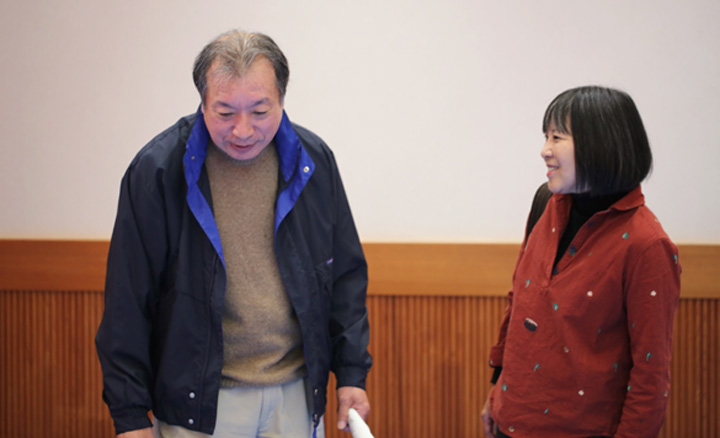
Takashi Iwadate and Nao Asano
We were guided through the event by lacquer artists Takashi Iwadate and Nao Asano. Ms. Asano studied lacquering under Mr. Iwadate and has since established her own independent studio in Hachimantai City, Iwate Prefecture.
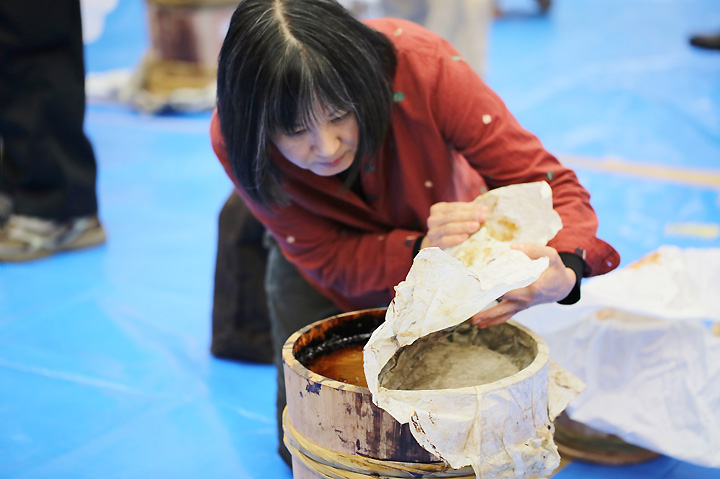
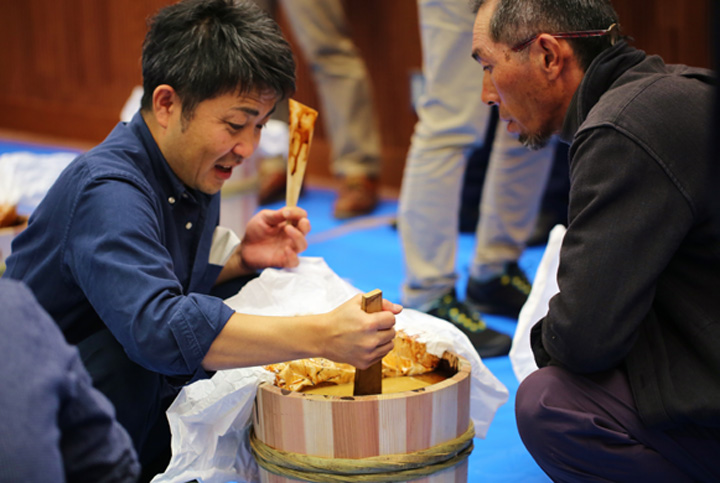
Opening the paper lids, they inspect the color, sheen, scent, and viscosity. The viscosity is judged by how the lacquer adheres when lifted from the paper cover. From the perspective of lacquer artist Ms. Asano, a fast-drying type appears to be ideal.
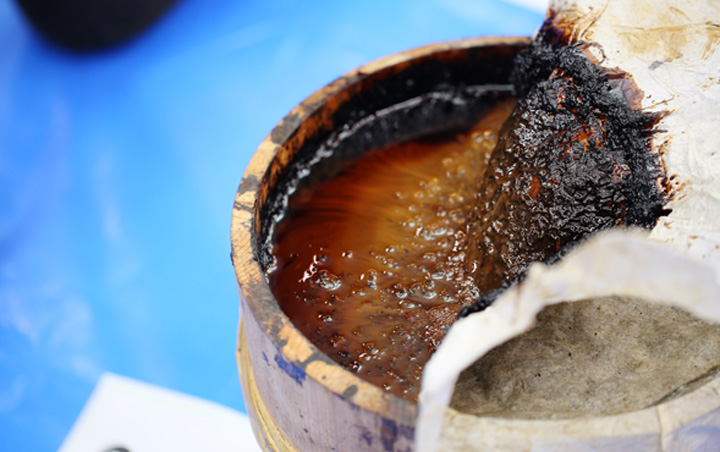
“See? It has that lovely urushi scent. Can you tell?” said Mr. Iwadate. A mild, sweet, and tangy aroma floated through the air of the venue, becoming richer as one leaned closer to the barrels.
I was accustomed to the clear, distinct scent of urushi that rises when opening a box containing a freshly completed soup bowl at our shop. Raw urushi, however, felt somewhat different, carrying a natural scent reminiscent of soil and tree bark.
About UrushiTo harvest urushi, horizontal cuts are made on the trunk of the tree, and the milky white sap that oozes out is scraped off using a spatula. This process is called “urushigaki” (lacquer tapping). Influenced by the local climate, the qualities of domestic urushi change depending on the time of year it is harvested. Categorizing lacquer by harvesting season is a unique practice exclusive to Japanese domestic urushi, allowing artists to make thoughtful, efficient use of each harvest by adapting their coating techniques to its specific qualities. |
 |
Urushi harvested from mid-June to late July is called “初辺 – Hatsuhen” (first cut). Known for its relatively fast curing speed, Hatsuhen is often used for finishing coats. It is especially suited for “fuki-urushi” (wiped lacquer technique), where wiping and polishing are repeated during maki-e finishing. |
 |
Harvested in the height of summer around August, “盛辺 ― Sakarihen” (peak cut) features low viscosity and excellent spreadability. It is primarily used for the topcoat finishing of soup bowls. |
 |
Urushi collected from early to late September is called “末辺 – Suehen” (late cut). Characterized by its high viscosity, it takes longer to dry. |
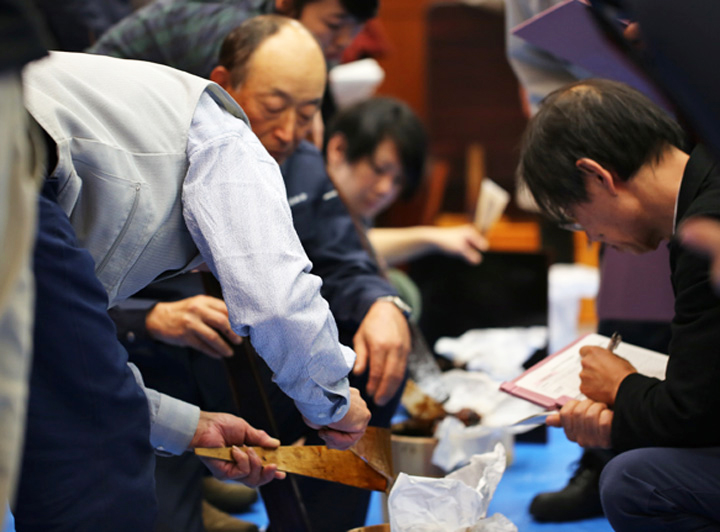
The Judging Begins
At last, the evaluation began. Quality is judged based on factors such as color, viscosity, and drying (curing) time. It was impressive to see the judges carefully inspecting each barrel with their check sheets in hand.
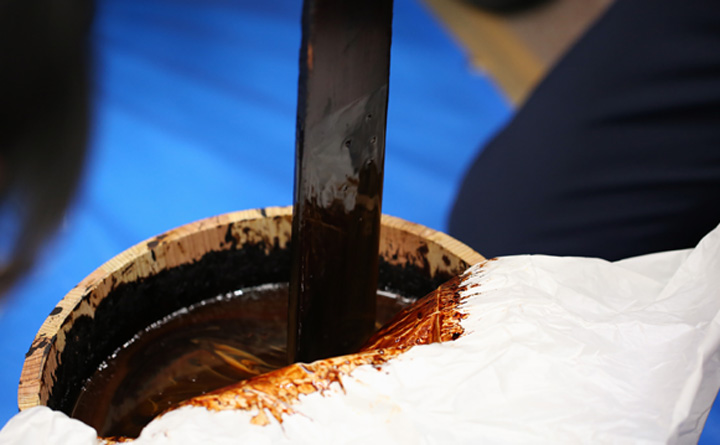
The large spatula mentioned earlier is inserted into the barrel.
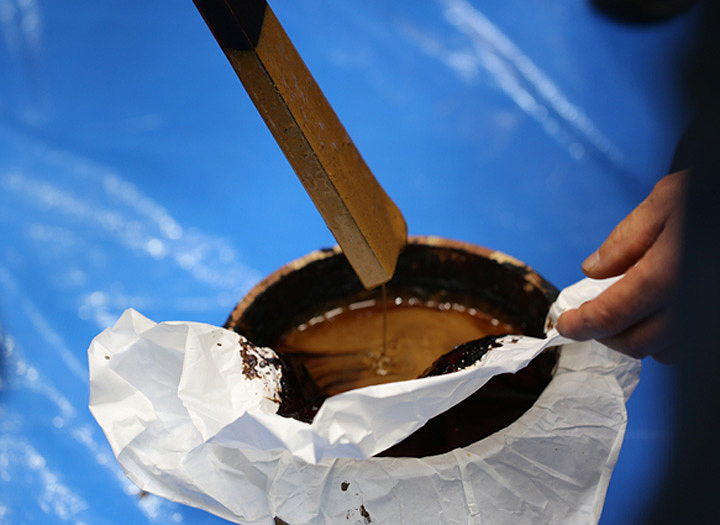
After stirring gently inside, lacquer of a different shade than the surface layer appears.
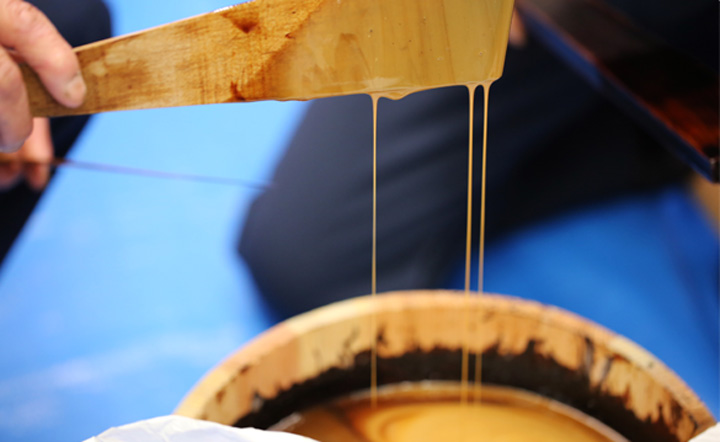
The urushi streams down smoothly like fine threads, flowing continuously without breaking. I was amazed by the fluid, silky consistency of the raw lacquer.
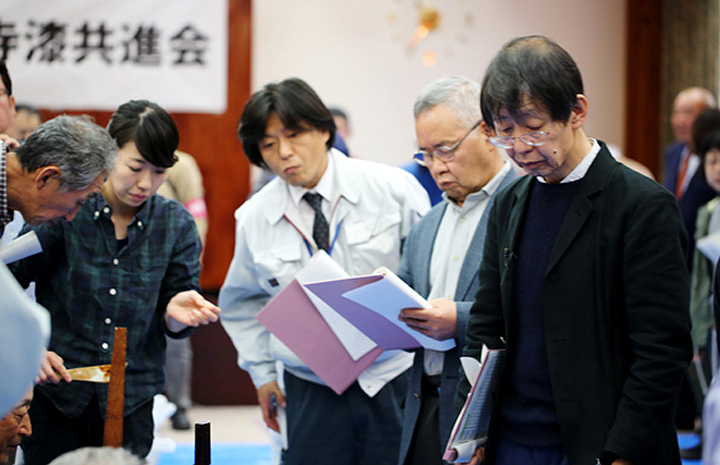
“This urushi is lovely.”
“What a fine color.”
“The spatula used for tapping wasn’t quite right for this one.”
“It looks like they applied a lot of force while harvesting.”
Fascinating conversations filled the air around the evaluation area. As it provided a wonderful opportunity to learn, many attendees followed the judges closely.
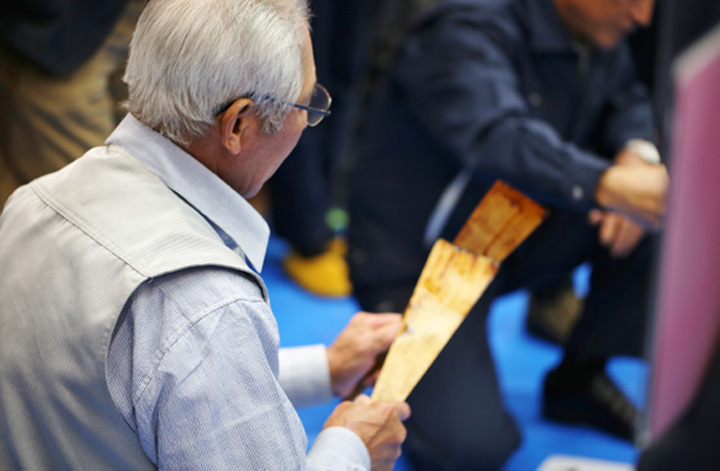
“This is excellent urushi—it spreads so smoothly.”
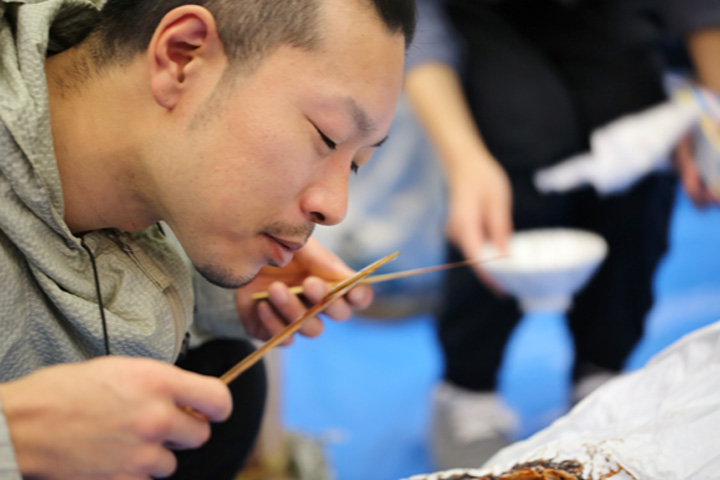
Lacquer artist Takumi Iwadate was also examining each barrel in detail. His dedication was evident as he leaned in remarkably close to inspect the lacquer.
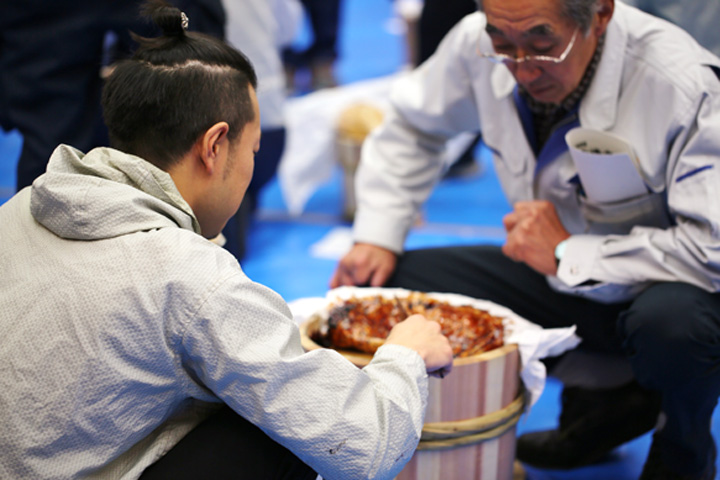
People continually stopped by to greet one another, likely sharing thoughts on this year’s harvest quality and trends.
Isamu Odashima from Tekiseisha was similarly inspecting each barrel with great care, as people paused to speak with him. Active interactions spanned across generations and fields, connecting lacquer artists, tappers, and others involved in the craft. That warm atmosphere filled the entire venue.
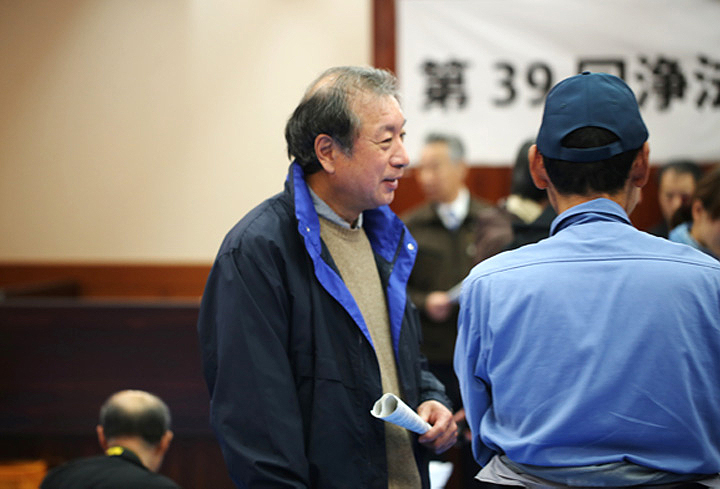
A steady stream of visitors also came over to speak with Mr. Takashi Iwadate. One could truly feel his respected presence as someone relied upon by so many colleagues. Even amid the busy gathering, he kindly checked on us, asking, “Did you get a photo here?” and “How about over there?”

Many press representatives were also present.
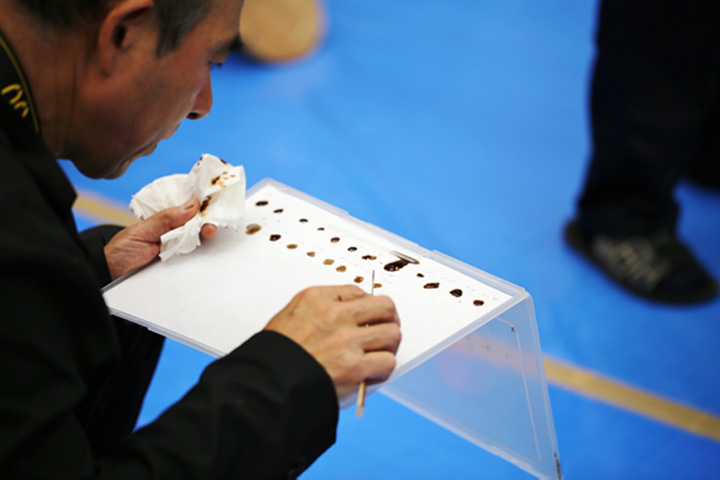
While participants conversed throughout the venue, the evaluation proceeded efficiently.
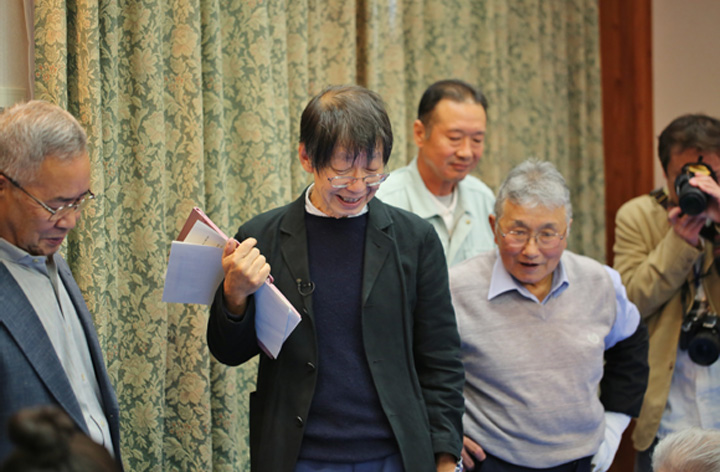
The judging progressed smoothly in a friendly yet focused manner. All 58 barrels of urushi were carefully inspected and evaluated to conclude the session.
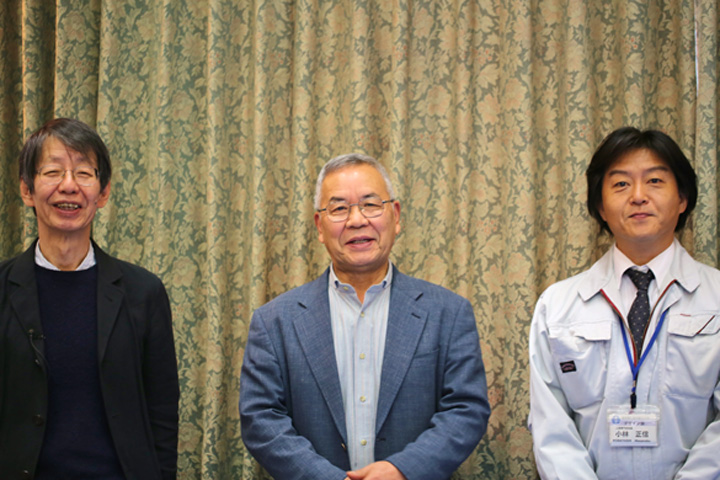
The three judges.
From left: Mr. Toshikazu Machida (Head of Machida Toshikazu Urushi Art Laboratory),
Mr. Morio Oikawa (Head of Oikawa Urushi Studio),
and Mr. Masanobu Kobayashi (Iwate Industrial Research Institute).
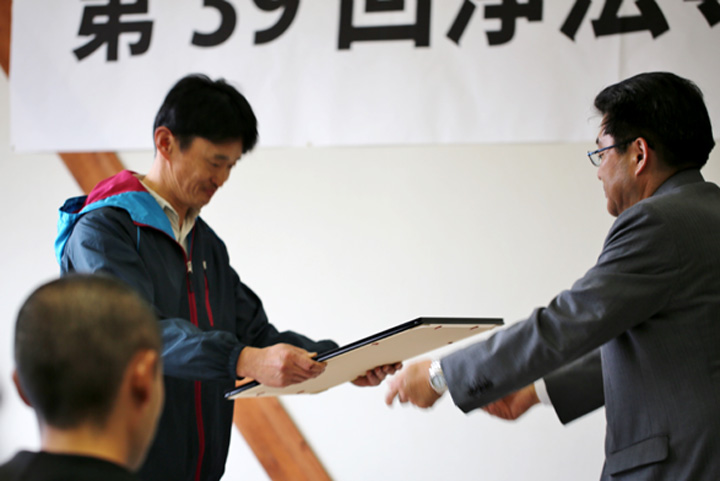
Next was the award ceremony.
The Gold Prize in the Sakarihen (Peak Cut) Division was awarded to Mr. Masayuki Seko.
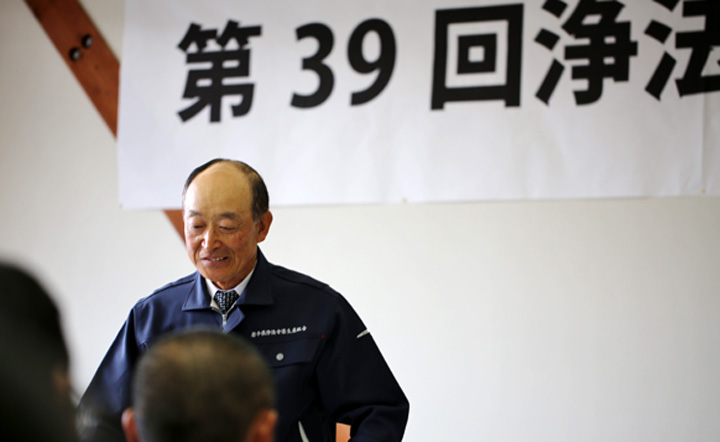
The Gold Prize in the Suehen (Late Cut) Division was awarded to Mr. Yoshio Izumiyama.

The Gold Prize in the Hatsuhen (First Cut) Division was awarded to Ms. Madoka Nagashima.
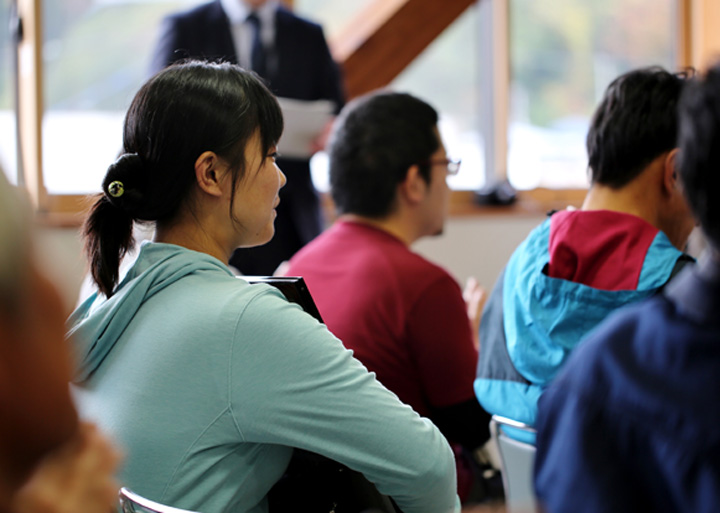
Ms. Madoka Nagashima began her journey in urushi tapping only a few years ago. Warmest congratulations!
She is a promising talent whose future endeavors we look forward to with great anticipation.
To preserve Joboji urushi, many people across both the public and private sectors continue their dedicated efforts in this traditional craft. In 2015, the Agency for Cultural Affairs established a policy stating that domestic urushi should be used for the restoration of National Treasures and Important Cultural Properties. Joboji urushi’s contribution to Japanese culture is set to grow even further, making its existence increasingly valuable.
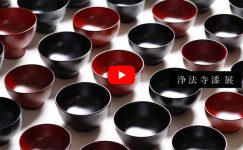
Soup bowls made with a generous amount of precious Joboji lacquer will begin arriving at our shop starting this autumn. Please stay tuned and take a look.
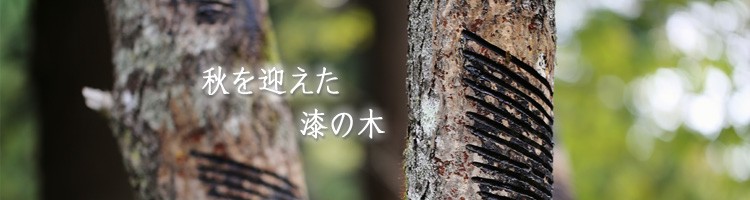
▼ Click here to read the late-autumn report on urushi forests as the tapping season ends ▼
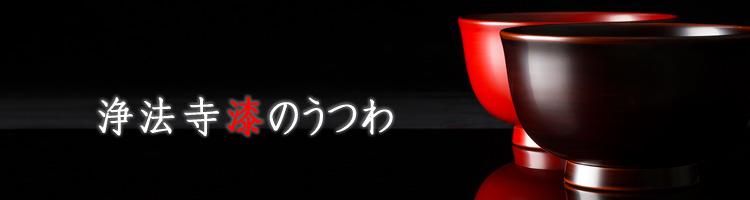
▼ Click here to view Joboji lacquerware, the peak of Japanese domestic urushi ▼
漆の里、浄法寺を訪ねて
2017年10月15日、岩手県二戸市と岩手県浄法寺漆生産組合が主催で行われた浄法寺漆共進会へ行ってきました。
今年採取された浄法寺の漆が一同に並び
ひとつひとつ漆の品質を確認する品評会です。
国産漆の最高峰、浄法寺漆の品質が高い水準で保たれる背景には
漆に携わる多くの人の、たゆまぬ努力がありました。
浄法寺漆共進会、このネーミングがいいですね。
確かに品評会ではありますが、皆で一緒に向上して行こうという誠実で前向きな印象を受けました。
それはこの後の会場の様子からもうかがい知ることになります・・・
漆の木の一生
国産漆は現在大変貴重なものです。
漆の木は成長するまでに8~13年と時間がかかりますが、漆を採取するのはたったの1年。
その1年で漆を採り尽くすため、1本1本に見極めと漆掻きの技術が必要になります。
「殺し掻き」という手法で採取し尽くした木は枯れてしまうので、その年に伐採してしまいますが
切り株から出た芽を育てて、また同じ営みを繰り返していきます。
※漆の掻き傷をつけることを辺(へん)といいます。
若い傷(主に下側)から1辺、2辺、3辺と数えます。
会場にはこのような樽が並んでいました。
中身は生漆(きうるし)といって、採取したままの状態で漆が保管されています。
国産漆の最高峰、浄法寺漆。
漆の国内自給率はわずか1~2%。その貴重な国産漆の約7割が岩手県
浄法寺で生産されています。ウルシオールの含有率が高く上質な浄法寺の漆は
汁椀をはじめとする工芸品だけでなく、日本の国宝や重要文化財の修理・修復にも欠かせません。
京都鹿苑寺(金閣寺)修復では1.5tもの浄法寺漆が使われたといわれており
現在も日光二社一寺(二荒山神社、東照宮、輪王寺)
「平成の大修理」の保存修理においても重要な役割を果たしています。
この樽が大小列になって会場に並び、審査を待っています。
同じ浄法寺の漆でも、掻き手によって品質に微妙な差が生まれるそうです。
また、その年の気候によっても変わって来るそう。
自然の影響を受けながら、ひと掻きずつ手作業で採取した漆は
ひと樽ひと樽、大変貴重なものです。
こちらは道具のスタンバイ。
この大きなヘラを使い、樽の中の漆の状態を確認するのだそうです。
自然な拭き漆の雰囲気に、道具の美が宿ります。
岩舘隆さんと浅野奈生さん
今回ご案内いただいたのは塗師の岩舘隆さんと浅野奈生さん。
浅野さんは岩舘さんに塗りについて学んだそうです。
現在は独立し岩手県八幡平市に工房を構えています。
紙の蓋を開けて色、艶、匂い、粘りの具合を確認します。
紙に漆が付く様子から粘りを見るそうで、塗り師の浅野さんから見ると
乾きの早いタイプが理想のようです。
「ほら、漆のいい匂いするでしょ。わかんない?」と岩舘さん。
会場全体に甘酸っぱいようなホンワカとした匂いが漂い
樽の近くに顔を寄せると、一層匂いを感じます。
普段お店で取り扱う漆器、完成直後の汁椀を箱から出す時に感じる
漆独特の澄んだ匂いには慣れていましたが、
生漆は多少違う気がして、土や木の皮の匂いがするように思えました。
漆のはなし
漆の木の幹に横筋の傷をつけて滲み出してくる白い樹液をヘラで掻き取ります。 |
|
6月中旬から7月下旬まで採取される漆を初辺(はつへん)といいます。 |
|
真夏の8月頃は粘度が低く伸びがよい盛辺(さかりへん)といいます。 |
|
9月上旬から下旬に採取した漆を末辺(すえへん)といいます。 |
審査がはじまります
いよいよ審査が始まりました。
品質は色、粘度、 乾き(硬化)などから判断されるそうです。
チェックシートを携えて、ひとつずつ丹念に見る姿が印象的でした。
先ほどの大きなヘラを樽の中に入れます。
中で少し混ぜると、樽の表面の色とは違う色の漆が出てきます。
糸を引いたように流れ落ち、いつまでも切れない漆。
生漆のなめらかな状態に驚きました。
「この漆はいいね」
「いい色だな」
「これは掻く時のヘラがあってないね」
「ずいぶん力を入れて掻いてるなぁ」
審査の近辺では、興味深い会話が飛び交います。
いろいろと勉強になるので、一緒についてまわる方も多くいらっしゃいました。
「これはイイ漆だなぁ、伸びがいいね」
塗師の岩舘巧さんも、ひとつひとつ細かな確認をされていました。
顔に付くほど漆への接近の姿は、さすがですね。
皆さんが次々に声を掛けてきます。
今年の漆の出来や傾向について話をされているのでしょうか・・・
滴生舎の小田島勇さんも同様に、ひとつひとつ入念な確認をされていました。
そして皆さんが声をかけて行きます。
世代や業種を越えて、塗師、掻き手、その他漆に携わる人との交流が盛んです。
そのあたたかな雰囲気が会場全体に行き渡っていました。
岩舘隆さんの所にも次々に人がやって来て声をかけていきます。
さすが岩舘さんですね。
大勢の仲間に頼られる岩舘さんの存在を大きく感じました。
そんな合間を縫って「ここ写真撮った?」「こっちは?」と気にかけてくださいました。
取材の方々も多くいらっしゃいました。
皆さんが交流し会場のあちこちで談笑されるなか、審査は次々に進んでいきます。
和やかな中にも坦々と進んだ審査。
総数58個にものぼる漆の樽を、ひとつひとつ見て調べて審査が終了しました。
審査をされた3名の方々。
左から町田俊一さん(町田俊一漆芸研究所代表)
及川守男さん(及川漆工房代表)
小林正信さん(岩手県工業技術センター)
そして表彰式
盛辺(さかりへん)漆の部金賞受賞は、瀬古昌幸さん
末辺(すえへん)漆の部金賞受賞は、泉山義夫さん
初辺(はつへん)漆の部金賞受賞は、長島まどかさん
長島まどかさんは、漆掻きを始めてまだ数年だそうです。
おめでとうございます!
これからの活躍が楽しみなホープですね。
浄法寺の漆を守ろうと、官民あげて多く人がこの伝統工芸に携わり努力を続けています。
文化庁は平成27年「国宝や重要文化財の建造物を修理する際には、国産漆を使用する」
との方針を決定しました。これまで以上に浄法寺漆はの文化への貢献は
高まり、その存在は益々貴重なものとなっていくことでしょう。
貴重な浄法寺漆をふんだんに使用した汁碗は、今年も秋から続々届きます。
是非お見逃し無くご覧ください。
関連記事はこちら