



English version of the article here.
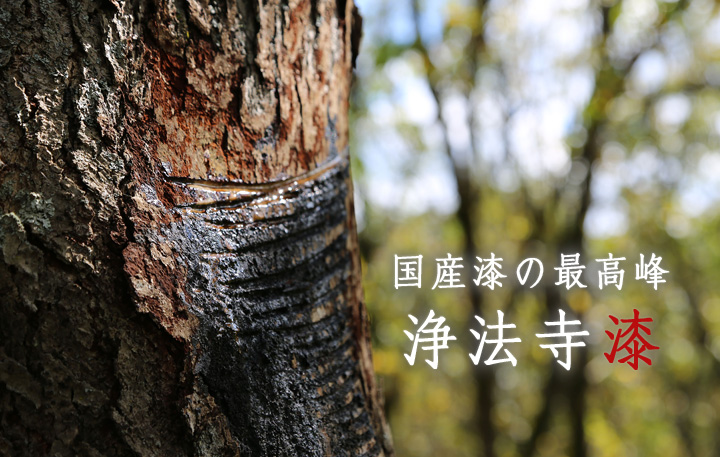
The Finest Japanese Lacquer: Jōbōji Urushi
Japan’s domestic self-sufficiency rate for lacquer is only about 1–2%.
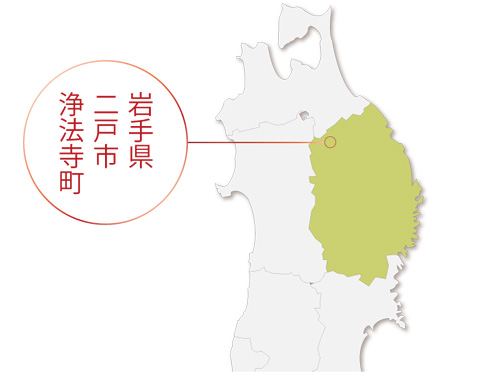
Roughly 70% of that is produced in Jōbōji, located in Ninohe City, Iwate Prefecture.
Thanks to its exceptionally high urushiol content—the main component of lacquer—
Jōbōji lacquer is indispensable not only for lacquerware such as soup bowls, but also for the restoration of National Treasures and Important Cultural Properties.
It is said that as much as 1.5 tons of Jōbōji lacquer were used in the restoration of Kyoto’s Rokuonji (the Golden Pavilion).
Today, Jōbōji lacquer continues to play an essential role in the “Heisei Grand Restoration” of Nikkō’s Futarasan Shrine, Tōshōgū Shrine, and Rinnōji Temple.
In 2015, the Agency for Cultural Affairs established a policy requiring the use of domestic lacquer for the restoration of National Treasures and Important Cultural Properties.
As a result, the cultural importance and value of Jōbōji lacquer will continue to grow.
“Urushi is the treasure of our homeland.”
This belief is shared by Iwate Prefecture, Ninohe City, and the many people involved in its production.
Together, they work to protect, nurture, and further develop Jōbōji urushi.
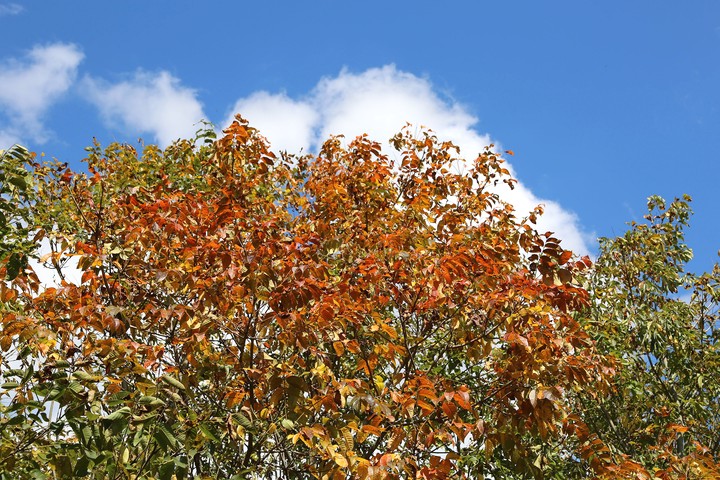
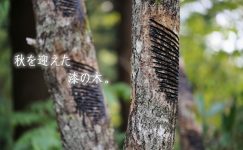
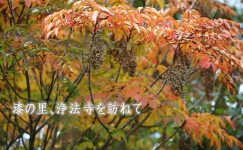
Urushi Forests in Autumn
As a deciduous broadleaf tree, urushi turns brilliant shades of red and yellow in autumn, coloring Ninohe’s rich mountain forests with vivid hues.
Lacquer tapping begins in mid-June and gradually comes to an end in October.
Urushi collected during this late season is called *sue-hen*, and is primarily used for undercoating.
Every last drop is carefully harvested, and once the work is complete, the tree has fulfilled its purpose.
Passing Down the Craft
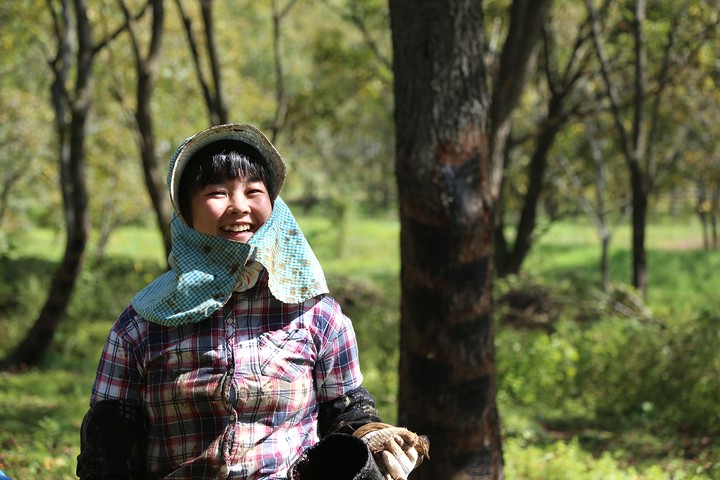
Ninohe City actively recruits individuals from across Japan who aspire to become urushi tappers.
Madoka Nagashima, originally from Saitama Prefecture, is one such trainee.
Although the work takes place in harsh natural conditions, training is carried out in an open environment where master artisans provide warm and attentive guidance.
In 2017, she achieved the remarkable honor of receiving an award at the annual lacquer quality competition.
▼Click here to watch lacquer tapping in Jōbōji▼
Authentic Japanese Lacquer
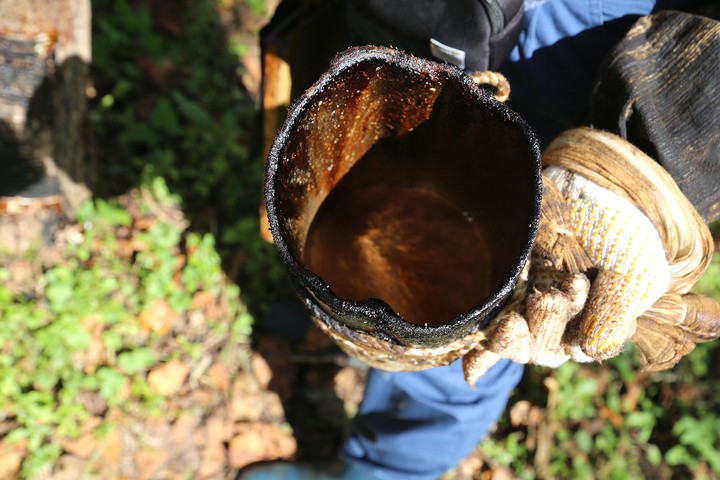
This is freshly collected urushi.
Although the urushi tree originally comes from warmer regions such as China and India,
those grown in Iwate—considered the northern limit of its natural habitat—grow more slowly.
As a result, their lacquer tends to have a slightly higher hardness.
A single urushi tree yields only about 200 grams—roughly one small milk bottle’s worth.
Each stroke is made with care, and the lacquer is gathered patiently over time.
Specialized Tools
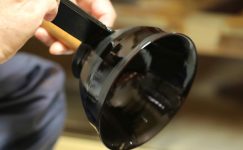
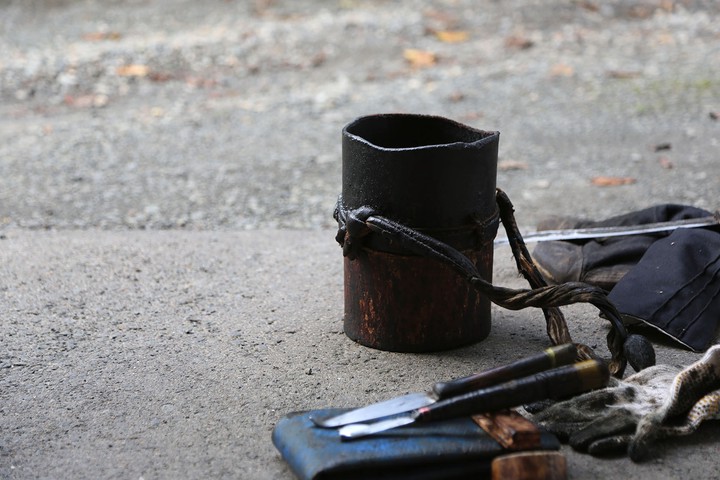
The tools used for lacquer tapping are unique.
From the bucket called a *takappo* to specialized hatchets, sickles, and spatulas, each item has a distinct purpose.
However, the number of blacksmiths capable of making these tools has been decreasing, and urushi tappers now face challenges in obtaining and maintaining them.
Many artisans cherish and carefully use the tools they already have.
A Place for Mutual Improvement
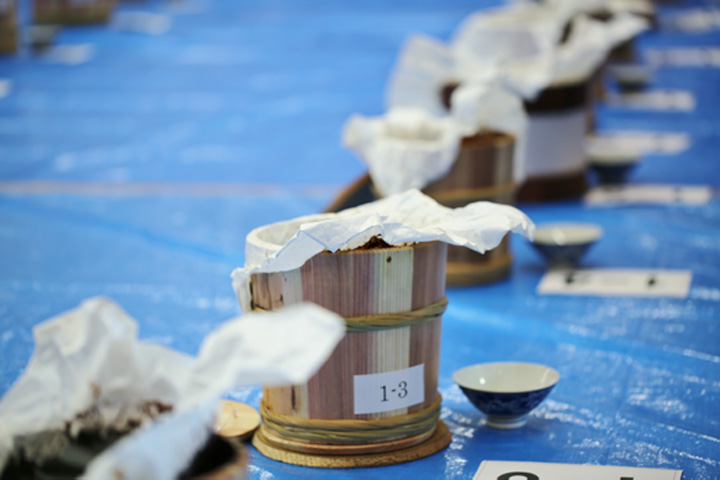
Held every autumn, the Jōbōji Urushi Competition brings together all lacquer harvested in that year for side-by-side evaluation.
Celebrating its 40th anniversary this year(2018), the event has long supported the high quality of Jōbōji lacquer.
It is also an important venue where urushi tappers refine their skills through friendly rivalry.
An Unending Cycle
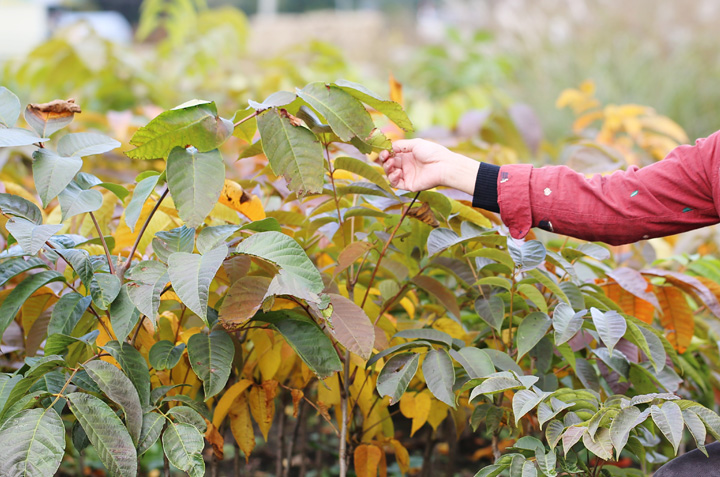
After 8 to 13 years of growth, lacquer trees are harvested using a method called “koroshi-gaki,” in which all the lacquer is collected within a single year, after which the tree is felled.
New shoots then sprout from the stump, and the cycle begins anew.The saplings in the photo are only about 50–70 cm tall.
After the autumn leaves fall, they are covered with straw mats to endure the winter.
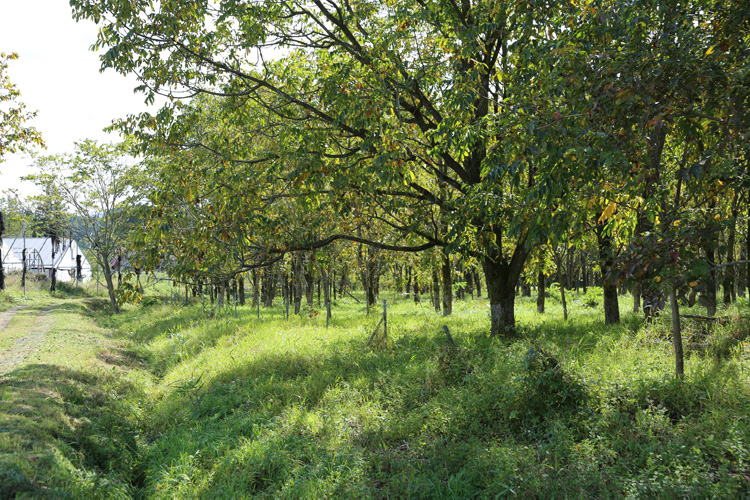
In early autumn, sunlight still carrying a hint of summer filtered through the trees, illuminating the broad lacquer grove.
Ninohe City continues to advance the development of Jōbōji lacquer through combined public and private efforts.
Each lacquer tree, extending its branches wide, seemed to embody the steady, dedicated steps of the many people who support this craft.
国産漆の最高峰 浄法寺の漆
漆の国内自給率はわずか1~2%。
その約7割は岩手県二戸市の浄法寺町で生産されています。
主成分であるウルシオール含有率の高い浄法寺の上質な漆はいまや、
汁椀などの漆器だけでなく、国宝や重要文化財にとっても欠くことができません。
京都鹿苑寺(金閣寺)修復では1.5tもの浄法寺漆が使われたといわれています。
そして、現在は日光二社一寺(二荒山神社、東照宮、輪王寺)の
「平成の大修理」においても、浄法寺漆は重要な役割を果たしています。
文化庁は平成27年「国宝や重要文化財の建造物を修理する際には、国産漆を使用する」との方針を決定しました。これまで以上に浄法寺漆の文化への貢献は高まり、その存在は益々貴重なものとなっていくことでしょう。
「漆はふるさとの宝」。
岩手県、二戸市、そして漆に携わる多くの人々がその想いを共にし、力を合わせながら、
浄法寺の漆を守り、育て、発展を続けています。
秋のウルシ林
落葉広葉樹である漆は、秋に赤や黄色に葉をそめて、二戸の自然豊かな山林を鮮やかに彩ります。6月中旬に始まる漆掻きは10月に入るとそろそろ終わりを迎えます。この時期に採取した漆は末辺と呼ばれ、主に下塗りに使われます。
最後の一滴まで無駄にせず採り尽くし、漆の木はその役目を終えます。
技術の継承
二戸市は全国から漆掻きを目指す人を募集しています。
埼玉県出身の長島まどかさんもその1人。仕事は厳しい自然の中ですが、技術育成は開かれた環境で行われており、名職人たちが温かく指導します。
そして、昨年2017年の共進会(漆の品評会)では見事入賞を果たすことになるのです。
▼浄法寺の漆掻きの様子はこちらから▼
本物の国産漆
採れたばかりの漆です。
本来中国やインドなどの温暖な地域を原産とするウルシ。
生育域北限とされる岩手の漆は成長がゆっくりですが、
その分漆の硬度がやや高いのが特徴です。
1本の漆木から採取できるのは約200gわずか牛乳瓶1本程。
ひと掻きずつ丁寧に、時間を掛けて採取されていきます。
専用の道具
漆掻きの道具は独特です。
タカッポと呼ばれる漆を入れる桶や、特殊な形状の鉈を始め、鎌やヘラも専用のもの。
最近はこれらを作る鍛冶屋さんが減りつつあり、
漆掻きの職人さんは、道具の確保やメンテナンスにも苦労されているとのこと。
皆さん今あるものを大切に使っているそうです。
切磋琢磨の共進会
秋に行われる浄法寺漆共進会は、その年に採取された浄法寺の漆が一同に並び、
一つひとつの漆の品質を確認しあう、年に一度の品評会です。
今年で40回を迎え、浄法寺漆の品質を支えてきました。
漆掻きに取り組む人々の切磋琢磨の場でもあります。
繰り返す営み
8~13年かけて育てた漆の木は「殺し掻き」という手法で
1年で漆を採り尽くし、伐採されます。
そしてまた切り株から出た芽を育て、営みが繰り返されます。
写真の苗木はまだ50~70cmほどの高さ。
紅葉で落葉した後、ムシロを覆って越冬させます。
秋、まだ残暑の残る木洩れ日が、広い漆林の足元を照らしていました。
官民をあげて浄法寺漆の発展に取り組む二戸市。
大きく枝を伸ばした漆の木1本1本が
多くの人々のたゆみない歩みを象徴しているようでした。
▼ ウツワノハナシ 浄法寺のあゆみはこちらから ▼
関連記事はこちら